17 March 1842 Bishop Michael Solomon Alexander of Jerusalem ordains Pioneer Missionary to Moslems

alexander

Michael Solomon Alexander, D. D., bishop of the Anglican Church

Bishop Alexander’s first year in Jerusalem was busy. His first ordination was of John Mühleisen, who worked with CMS in Ethiopia, and was a pioneering missionary to Moslems. The organization he proposed, “The Society for Propagating the Gospel among the Moslems, in connection with the Church of England” owed not a little in its vision, aims and organization, to “The London Society for the Promoting Christianity amongst the Jews”

Gidney records:(p235):

“The Bishop held his first Ordination on March 17th, the candidate being John Mühleisen, C.M.S. Missionary for Abyssinia, and baptized a Jewish family on Whitsun-Day. On October 9th, he held his first Confirmation, when eight Hebrew Christians were presented; the next week he married two converts, and, on October 30th, ordained E. M. Tartakover, the first Hebrew Christian ordained at Jerusalem since Apostolic days. There were now a bishop, a priest [Ewald], and a deacon, all “Hebrews of the Hebrews,” ministering on Mount Zion; and, within a few months, every ordinance of the church had been performed in the chapel. A larger building, capable of seating 150 persons, was subsequently used in place of the previous “upper chamber.” Eight Jews were baptized during the year 1842.”

Screen Shot 2015-03-16 at 23.50.24

More details are given about Muhleisen here:

MÜHLEISEN-ARNOLD, mụl’ī-zen är’nold, John (1817-81). An English clergyman, missionary, and author, born at Zell (Württemberg). He was educated in Germany, and after his removal to England was successively missionary of the Church Missionary Society in India and Abyssinia, chaplain to the Bishop of Gibraltar, and chaplain to Saint Mary’s Hospital, Paddington, London (1852-61). In 1850 he founded the Moslem Mission Society in England. He was chaplain of East Ham, Essex, from 1861 to 1865, consular chaplain at Batavia, Java, from 1865 to 1871, and rector of Saint Mary’s Church, Papendorf, Cape Town, South Africa, from 1876 until his death. His publications include:Ishmael: or, A Natural History of Islamism (1859); English Biblical Criticism, and the Authorship of the Pentateuch, from a German Point of View (2d ed. 1864); and Genesis and Science, or, The First Leaves of the Bible (2d ed. 1875).

More details about Tarkatover’s ordination from Juliet Greene in a letter  dated Nov 1 1842 from Rev Nicolayson:

“Mr [Emanuel Mendel] Tartakover, ever since his arrival here on Aug 12 had been diligently preparing for examination previous to his admission to deacon’s orders. The bishop had fixed upon Sunday 30th Oct for conferring deacon’s orders upon the two candidates (Mr Tartakover and Mr Whitmarsh). The Bishop preached on 2 Timothy 4: 1 & 2. It is deeply interesting to observe that, by that day’s solemnities, the nucleus of a Hebrew Christian Church in this city is now complete in all its offices, as well as functions. There is now here a bishop, a priest (Mr [Ferdinand Christian] Ewald) and a deacon also, all “Hebrews of the Hebrews”, a fact, in the history of Jerusalem, which has not been realized since its final destruction, by Adrian, in the second century.”

Prayer: Thank you, Lord, for these men of faith, vision and service – Alexander, Mühleisen, Ewald and Tarkatover. The ministries they pioneered and the roles they played speak volumes to us, 170 years later, in a different world with different challenges. Help us to know the secret of their faith, and live our lives with the same calling, diligence and discipleship they displayed. In Yeshua’s name we pray. Amen.

  1. Muhleisen-Arnold, The Society for Propagating the Gospel among the Moslems, in connection with the Church of England; its First Appeal on behalf of 180 millions of Mohammedans (London, 1860).

http://www.forgottenbooks.com/readbook_text/The_Colonial_Church_Chronicle_and_Missionary_Journal_1861_1000419659/201

Posted in otdimjh | Tagged , , , , , | 2 Comments

16 March 1190 York’s Clifford Tower masacre – worst antisemitic attack in the UK #otdimjh

6127794

At the foot of Clifford’s Tower a plaque marks the darkest chapter in the history of York’s Jewish community. The plaque reads:

On the night of Friday 16th March 1190 some 150 Jews and Jewesses of York, having sought protection in the Royal Castle on this site from a mob incited by Richard Malebisse and others chose to die at each other’s hands rather than renounce their faith.(Isaiah XLII:12 )

ישימו ליהוה כבוד ותהלתו באיים יגידו

Let them give glory unto the LORD, and declare his praise in the islands

domesday-england

On March 16th 1190 a wave of anti-Semitic riots culminated in the massacre of an estimated 150 Jews – the entire Jewish community of York – who had taken refuge in the royal castle where Clifford’s Tower now stands. The chronicler William of Newburgh described the rioters as York acting “without any scruple of Christian conscientiousness” in wiping out the Jewish community. And William was not the only chronicler to record these lamentable acts, as the Chronicles of the Abbey of Meaux in East Yorkshire, and Roger of Howden include accounts.

york

Anti-Semitic feeling was running high throughout western Europe in the twelfth century, stoked by the Christian fervour of the Crusades, that directed aggression against Jews across England, France and Germany, as well as against Muslims in the Holy Land. England’s new king Richard I was about to set off on Crusade himself. Rioting had spread throughout England since prominent Jews, including Benedict of York, had been denied entry to King Richard I’s coronation banquet in 1189. Benedict was the wealthiest Jew of York and he was mortally wounded in the rioting at Westminster.

8672218921_news_index

After rioting had engulfed the towns of Norwich, Stamford and Lincoln they began in York with a mob attempting to burn down Benedict’s palatial house. The Jews were officially protected by the king as his feudal vassals and sought protection in the royal castle, barricading themselves into the wooden keep. The rioters, meanwhile, were egged on by members of the local gentry called Richard Malebisse, William Percy, Marmeduke Darell and Philip de Fauconberg.

gal_normans_cliffords_tower

These men saw the riots as an opportunity to wipe out the extensive debts they owed to Jewish money-lenders in the city. These men had borrowed heavily from Jewish money-lenders but had failed to secure lucrative royal appointments and so could not afford to repay their debts. Indeed, after the massacre they proceeded to burn the records of their debts held in the Minster, so absolving themselves from repayment to the king, who would acquire the property and debts owed to the murdered Jews.

ctrotatinginsideimage

The Jews in the castle keep, fearing treachery, locked out the royal constable, who then demanded the castle be captured by force. As a group of knights arrived to attack the castle, supported by siege engines a fiery hermit who had been inciting the mob was killed by a falling stone. This event further incensed the angry crowd, baying for Jewish blood.

images (28)

Seeing no way out to safety most of the Jews chose to commit suicide in the keep. The alternatives were to renounce their faith and surrender to forced baptism or death at the hands of the mob. They were led by the wealthy Jew Josce and Rabbi Yomtob, a noted scholar, who had come to York from Joigny in France. On March 16, on the eve of Passover, realizing that all hope was lost, Rabbi Yomtob asked his brethren to choose suicide rather than submit to baptism. First setting fire to their possessions, one after the other killed himself. More than 150 died in this way, and the few survivors were murdered by the mob, who also destroyed the register of debts to the Jews. After killing their wives and children they set fire to the wooden keep and killed themselves.

K940999

A few Jews refused the option of suicide, but it seems their fate was no better, dying either in the fire, or murdered by the rioters. The blackened remains of the fire were uncovered in excavations at Clifford’s Tower in the 20th century. From the ashes of that fire the present stone keep of Clifford’s Tower was constructed. The events at York were an affront to the dignity and authority of King Richard and so a royal inquest was held soon afterwards. This resulted in the city receiving a heavy fine, but by that time the instigators had escaped and no individuals were ever punished for the crimes committed on that fateful night. Probably some of them joined the King himself on crusade, as he was by then en route to the Holy Land through France.

images (29)

The massacre of 1190 was a horrific catalogue of violence and murder driven by religious intolerance and the greed of those who owed the leading Jewish money-lenders money. And it was sadly only one of countless incidents of mob-violence against Jewish communities across England and Western Europe in the Middle Ages.

Screen Shot 2015-03-16 at 08.06.07

In Jewish tradition a cherem (ban) was placed on the city, preventing Jewish people from living there. However, Dr Helen Weinstein has shown there are no records of any such a ban, and today there are attempts to rebuild the Jewish community there. The orthodox synagogue was closed in 1975 but there is a Liberal Synagogue there.

Screen Shot 2015-03-16 at 07.55.03

Today the site is a tourist attraction but the city of York has developed educational projects and the Holocaust Memorial Day has other activities. But the place still carries such a strong presence of the traumatic events of 1190 that is leaves you shuddering, and deeply moved.

Screen Shot 2015-03-16 at 07.30.04

“On the night of Friday 16 March 1190 some 150 Jews and Jewesses of York having sought protection in the Royal Castle on this site from a mob incited by Richard Malebisse and others chose to die at each others hands rather than renounce their faith HEBREW ISAIAH XLII  IV

Screen Shot 2015-03-16 at 07.29.30

Prayer and reflection. After such a black day in the history of the Jews in the United Kingdom it is not surprising that Jewish people did not live there for many centuries. I visited the area a few years ago, and could not hold back tears of grief, sadness and mourning. For Messianic Jews in the UK this is one of the starkest reminders of the disconnect between the two communities, Jews and Christians, of which we are a part. Lord, how often have we committed acts of violence in your name, and how often have your people Israel suffered at the hands of those whose ‘crusading zeal’ was a mask for their own self-interest and xenophobia. Lord, have mercy. In Yeshua’s name we pray. Amen.

http://www.haaretz.com/jewish-world/centuries-later-york-comes-to-terms-with-the-worst-anti-semitic-attack-in-britain-1.418904

http://historyworks.tv/projects/2014/11/02/york-castle-project/

http://www.ochjs.ac.uk/mullerlibrary/digital_library/Intranet/Loewe/stainedglassdesign/RL/Raphael-13.html

http://www.jewishvirtuallibrary.org/jsource/History/crusades.html

http://www.historyofyork.org.uk/themes/norman/the-1190-massacre

PLAQUE COMMEMORATING THE 1190 MASSACRE INSTALLED BY JEWISH HISTORICAL SOCIETY

There is a prominent plaque acknowledging the massacre of Shabbat HaGadol when almost every member of York’s Jewish Community perished in 1190. Shabbat haGadol means the Great Sabbath and has particular significance in the Jewish calendar because it is the Shabbat which precedes Passover.  The plaque commemorating the tragedy is situated at the base of the Clifford’s Tower in York which is a commemorative marker rather than a piece of interpretation. It was installed after a prolonged campaign by the Jewish Historical Society of England.

The plaque text is chisseled in granite and is situated to the left of the staircase up to the Tower: “On the night of Friday 16 March 1190 some 150 Jews and Jewesses of York having sought protection in the Royal Castle on this site from a mob incited by Richard Malebisse and others chose to die at each others hands rather than renounce their faith HEBREW ISAIAH XLII  IV

http://historyworks.tv/projects/2014/11/02/york-castle-project/

Posted in otdimjh | Tagged , , , , | 4 Comments

15 March 1473 Three days of rioting leads to expulsion of Jews from Cordoba  

Cordoba-collage-jewish-quarter

Tensions arose in Córdoba, the city of Maimonides,the great rabbi, diplomat, philosopher and doctor of two centuries before, when the Moslem rulers allowed the flourishing of a golden age for the Jewish people. Now, under Christian rulers, it became the location for riots and attacks on Jewish believers in Yeshua.

440px-Wzwz_Moses_Maimonides

Moses Maimonides 1135-1204

Old Christians, those without Jewish background,  and the New Christians (conversos from Jewish families) formed two hostile parties. On March 14, 1473, during a dedication procession, a girl accidentally threw dirty water from the window of the house of one of the wealthiest conversos (the customary way to dispose of it.) The water splashed on an image of the Virgin being carried in procession in honour of a new society (from which conversos had been excluded by Bishop D. Pedro.) Thousands immediately joined in a fierce shout for revenge.

walk1_mosque_jewry_alcazar

The mob went after conversos, denouncing them as heretics, killing them, and burning their houses.

355px-Monumento_a_Isabel_la_Católica_Madrid_04a

Bronze statue of Gonzalo Fernández de Córdoba (1453–1515). Detail of the Monument to Isabella of Castile, the Catholic, at Paseo de la Castellana in Madrid, by Manuel Oms y Canet.

To stop the excesses, the highly respected D. Alonso Fernandez de Aguilar, whose wife was a member of the converso family of Pacheco –

P4280118

D. Gonzalo Fernández de Córdoba

– together with his brother D. Gonzalo Fernández de Córdoba (“El Gran Capitán”), and a troop of soldiers, hastened to protect the New Christians. D. Alonso called upon the mob to retire. Its leader insulted the count, who immediately felled him with his lance. Aroused, the people considered him a martyr.

attraction.AlmodovarCastleInCordoba621

Incited by Alonso de Aguilar’s enemy, they again attacked the conversos. Men, women, and children were all killed. The rioting lasted three days. Those who escaped sought refuge in the castle, where their protectors also took shelter. The government decreed that no converso should thenceforth live in Córdoba or its vicinity, nor should one ever again hold public office, as if that meant the people would never find a reason to riot.

Prayer: Yet again we see the disastrous miscommunication between so-called believers in Jesus, here from Jewish and non-Jewish backgrounds, that leads to hatred, conflict, persecution and oppression. How often in our own day does the refusal of the powerful to listen to the needs of the poor, the marginalised and “the other” lead to stereotyping, demonization, and the very opposite of the love for one another that Yeshua taught was to be the hallmark of our love for you, O Lord, and the key to effective discipleship and witness to the world. Amen, Lord have mercy!

http://nobility.org/2013/04/11/captain-gonsalvo-de-cordoba/

http://en.wikipedia.org/wiki/Marrano

Anti-Converso Riots of the Fifteenth Century by Norman Roth

revistas.ucm.es/index.php/elem/article/download/…/23667

Conversos, Inquisition, and the Expulsion of the Jews from Spain – Norman Roth

Posted in otdimjh | Tagged , , , , , , | 2 Comments

14 March 1932 Benno Karpeles, political journalist and activist, baptised #otdimjh

webmedia

Benno Karpeles (1868- 1938) was an Austrian politician, publicist and editor. Formerly a writer on the staff of the “Arbeiter-Zeitung,” a Socialist newspaper in Vienna, he is little known today.

440px-Bundesarchiv_Bild_102-00241,_Therese_Neumann

After visiting Theresa Neumann, the stigmatist [mystic with the signs of the cross on her body] of Konnnersreuth, Gerrnany, several times, he was baptized on March 14, 1932, in the little church at Konnersreuth, and Theresa was his godmother. He had been a political journalist and activist, at times Communist, Socialist, Anarchist, Centrist and Social Democrat. As a Roman Catholic he tried also to develop his political views alongside his faith, but apparently without success. I have not been able to confirm all the details of his story, or find a photo of him, and would be grateful if anyone has any further information.

Karpeles_Friede_TF

Karpeles studied Economics in London (1894-1897), where he has also became ​​acquainted with the leaders of the British labor movement, and knew Engels. For some time he worked as the London correspondent of the Arbeiter-Zeitung.

a660968a

From 1897 to 1899, Karpeles worked in Switzerland to develop a socialist movement; after his return to Vienna, he was political editor of the Arbeiter-Zeitung and representative of the Austrian trade unions at the Second International. The Second International (1889–1916), the original Socialist International, was an organization of socialist and labour parties formed in Paris on July 14, 1889. At the Paris meeting delegations from 20 countries participated.

In 1918 after tensions and disillusionment within the party he left and founded a new political Journal – “Peace” (1918-19). “Peace” saw itself as an opponent to the “imperial post”, the “main journal of the warmongers” of 1918. His program was short, concise and very ambitious: After the military attempts to make Europe German and Austrian have failed, let us now try to make Germany and Austria-European.

In the short time after the appearance of the magazine succeeded Karpeles succeeded in building up a group of contributors, from the anarchist or Spartacist-oriented left covering the entire intellectual and political spectrum of the center parties. These included such illustrious personalities as Alfred Adler , Peter Altenberg, Hermann Broch, Max Brod, Paul Claudel, Anatole France, André Gide, Maxim Gorky, Stefan Grossman , Albert Paris Gütersloh, Theodor Heuss, Egon Erwin Kisch, Paul Kornfeld, Anton Kuh, Heinrich Lammasch, Karl Leuthner , Adolf Loos, Thomas Mann, Robert Musil, Leo Perutz, Romain Rolland, Josef Luitpold Stern , Franz Werfel and Hugo Wolf. The core of the editorial team were next Karpeles Karl Tschuppik, Richard A. Bermann aka Arnold and Alfred Polgar Hollriegel as literary editors.

Karpeles_Tag_TF

In 1919 Benno Karpeles acquired literary fame with the newspaper “The New Day.

Karpeles became a Roman Catholic in 1932 and tried to reconcile his socialist views with Catholic teaching.

Prayer: As with many at that time, the revolutionary and social ideals of Marx and Engels lost their appeal as the Communist utopia they worked for turned out to be a wasted dream. We do not know the precise thoughts or circumstances that led Benno Karpeles to become a Roman Catholic, but we thank you that you call each one of us to faith in you, and be a means of transformation, so that our personal and spiritual lives make a difference in our social and political contexts, and in the world you have made for your glory. In Yeshua’s name, Amen.

http://en.wikipedia.org/wiki/Therese_Neumann

 http://www.dasrotewien.at/karpeles-benno.html

Karpeles, Benno 1868, Wien – 1938, Wien

http://www.salvationisfromthejews.com/levy.html

During a Holy Communion, a host disappeared in Teresa’s mouth without being swallowed as soon as it was put into her mouth. This event was witnessed by priest Naber, Viennese Jewish merchant Dr. Benno Karpeles and others.

http://www.magnificat.sk/old/English/E_htm1/e009neumannova.htm

Clara Goldberger de Buda (born Karpeles), 1870-1934

Clara Goldberger de Buda (born Karpeles) was born on month day 1870, to Moriz Karpeles and Emma Karpeles (born Bing).

Moriz was born on November 1 1935, in Ungarn, Tab.

Emma was born on October 12 1840, in Vienna, Austria.

Clara had 7 siblings: Helene Kuranda (born Karpeles), Dr. Benno Karpeles and 5 other siblings.

Clara married Arnold Goldberger de Buda.

Arnold was born in 1864.

They had 2 children: Dr. Richard Goldberger-Buda and one other child.

Clara passed away on month day 1934, at age 63.

Posted in otdimjh | Tagged , , , | 2 Comments

13 March 1873 Death of John Christian Reichardt, Translator of LSPCJ Hebrew New Testament #otdimjh

Screen Shot 2015-03-11 at 19.34.46

Just before the close of this Period the London Mission sustained a further heavy loss by the death on March 13th,1873, in the 70th year of his age, of the Rev. John Christian Reichardt, who for very nearly half a century had devoted his life as a missionary to the Jews. (Gidney p344ff, here)

Screen Shot 2015-03-11 at 19.34.55

Appointed as far back as 1824, he worked, as we have already seen, in Warsaw, and in London, and also temporarily in Jerusalem, and in Holland. He was Clerical Superintendent of the Operative Jewish Con-verts’ Institution from 1831 to 1851. A brilliant scholar, he is chiefly remembered for his great work, already referred to, con-tinued for many years, on the Society’s editions of the Hebrew Old and New Testaments.

123-184x286

He also rendered conspicuous service in the training of candidates for missionary employment. He had great influence with the Committee, whose meetings he frequently attended — an influence which was increased by his connexion by marriage with Goodhart, at that time secretary. Reichardt’s death, which occurred almost suddenly in the midst of his multifarious labours, snapped a link with the second generation of the Society, which was incalculably the poorer by the departure of three of its very foremost workers — Cartwright, Ewald and Reichardt — within twelve years.

9781271402342

Reichardt was minister of the Episcopal Church, was born at Ruhrort, on the Rhine, in 1803. He was educated first at the public school in his native place, and afterwards pursued his studies at the gymnasium at Duisburg. Feeling a desire to devote himself to missionary work, he was recommended to the missionary society at Barmen, which received him, and he was sent by it to the excellent Janicke’s Missionary Institution at Berlin.

41+FZoRthlL._AA160_

Janicke had no funds at command to enable him to send forth missionaries, but the missionary societies in England, in Holland, and elsewhere were thankful to avail themselves of those who had been trained by the venerable pastor in Berlin. In the year 1824 the London Society for Propagating the Gospel among the Jews appointed Mr. Reichardt for the mission in Poland, in connection with Mr. Becker, a former pupil of father Janicke.

9781271402342

During 1825 and 1826 he travelled extensively through Poland; from 1827 to 1830 he was engaged in frequent missionary journeys in Holland and Bavaria, and in 1831 he was active, together with the late Rev. M. S. (afterwards bishop) Alexander, in preaching the Gospel to the Jews in London and the principal towns of England. From that time his permanent residence was at London, in prosecution of the missionary work in behalf of his society. In October, 1857, Mr. Reichardt left England on a special mission to Jerusalem, where he also remained for a time. After his return from Jerusalem, his time and efforts were mainly directed to the work of the society in England, with occasional visits to various missionary stations. His main work, however, was the revision of the text of the Hebrew New Testament, which was printed and published several times, and in correcting for the press multiplied editions of the Old Test., which the London Society, as well as the British Bible Society published.

images

He also took part in the training of candidates for missionary employment, and, after he was permitted to labour until his death, March 31, 1873. In connection with his missionary work, he published a number of pamphlets, which have been translated by his fellow-labourers into Dutch, French, etc., viz. Proofs that Jesus of Nazareth is the Son of David (London 1851, and often): — Proofs that the Messiah, the Son of David, is also the Son of God (ibid. 1851, and often): — The Scriptural Doctrine of the God of Israel (ibid. 1851, and often):: —The Two Covenants, or Mosaism and Christianity (2d ed. ibid. 1857): — -Investigation of the Prophet Joel with Special Reference to the Coming Crisis (ibid. 1867). See Jewish Intelligencer (London.), 1851, p. 427 sq.; 1867, p. 34 sq.; May, 1873; Dibre Emeth, oder Stimme der Wahrheit (Breslau, 1873), p. 97 sq.; Delitzsch, Saat auf Hoffing (1873), 10:228 sq.; Fiirst, Bibl. Jud. 3:143; Zuchold, Bibl. Theol. ii, 1044. (B. P.)

7991719950_1f0c77767d_o

Prayer: Thank you Lord of the life of scholarship and service of John Christian Reichardt, and his legacy in the Hebrew New Testament and other works. The lives he touched, the faith he lived, and the witness he gave, continue to speak to us today. Help us to live in the light of your love this day. In Yeshua’s name we pray. Amen.

https://studylightforums.org/encyclopedia/mse/view.cgi?n=20387

His son Dr Ernest Noel Reichardt lived at Dorset House, Cheam Road, Ewell and was supervisor of a mental asylum. His story is told here:

http://www.epsomandewellhistoryexplorer.org.uk/Reichardt.html

Posted in otdimjh | Tagged , , , , , , | 1 Comment

12 March 2000 Pope John Paul II asks forgiveness for sins of the Church against the Jewish people #otdimjh

pope

  1. Confession of the Sins Against the People of Israel

Cardinal Edward Cassidy: Let us pray that, in recalling the sufferings endured by the people of Israel throughout history, Christians will acknowledge the sins committed by not a few of their number against the people of the Covenant and the blessings, and in this way will purify their hearts. [Silent prayer.]

The Holy Father: God of our fathers, you chose Abraham and his descendants to bring your Name to the Nations: we are deeply saddened by the behaviour of those who in the course of history have caused these children of yours to suffer, and asking your forgiveness we wish to commit ourselves to genuine brotherhood with the people of the Covenant. We ask this through Christ our Lord. Response: Amen. Kyrie, eleison; Kyrie, eleison; Kyrie eleison. [Lord, have mercy]

Screen Shot 2015-03-12 at 07.39.39

Sunday, 12 March, 2000, 19:48 GMT

Pope apologises for church sins

Pope John Paul II has publicly asked God’s forgiveness for the sins of Roman Catholics through the ages, including wrongs inflicted on Jews, women and minorities.

The unprecedented gesture by the spiritual leader of the world’s one billion Catholics is one of the first major events of the Vatican’s year-long celebrations marking the beginning of the new Christian millennium.

We are asking pardon … for the use of violence committed in the service of truth
Pope John Paul II

“We are asking pardon for the divisions among Christians, for the use of violence that some have committed in the service of truth, and for attitudes of mistrust and hostility assumed toward followers of other religions,” said Pope John Paul II, dressed in the purple robes of Lent.

The phrase “violence in the service of truth” is an often-used reference to the treatment of heretics during the Inquisition, the Crusades, and forced conversions of native peoples.

Sweeping forgiveness

The Pope’s homily at The Day of Pardon Mass in St Peter’s Basilica in the Vatican did not mention specific groups.

Christians will acknowledge the sins committed by a not a few of their number against the people of the Covenant
Cardinal Edward Cassidy

But confessions of sin made by five Vatican cardinals and two bishops, each with a response from the Pope, did ask for forgiveness for named wrongs.

Cardinal Edward Cassidy, raising the issue of the treatment of Jews, said: “Christians will acknowledge the sins committed by a not a few of their number against the people of the Covenant.”

“We are deeply saddened by the behaviour of those who in the course of history have caused these children of yours to suffer, and asking your forgiveness we wish to commit ourselves to genuine brotherhood,” the Pope responded.

The Roma, or gypsy people, were also mentioned as having suffered.

Israel wanted more

But Rabbi David Rosen, head of the Jerusalem office of the Anti-Defamation League of B’nai B’rith, said expectations that the Pope would say more were perhaps “a little unrealistic”.Israel’s chief rabbi, Meir Lau, said he expected more and described himself as “deeply frustrated” by John Paul’s failure to mention the Holocaust by name.

“I hope deeply that the Pope of today whom I appreciate very much for his doings and for his condemning anti-Semitism will complete the asking of forgiveness next week in Yad Vashem in Jerusalem,” Rabbi Lau said.

The Pope is going on pilgrimage to Israel later this month – the first papal visit for more than 30 years.

Other confessions touched on treatment of racial and ethnic groups and “contempt for their cultures and religious traditions” and towards women “who are all too often humiliated” and marginalised.

Prayer: Too often in the past the Jewish people faced discrimination, persecution and death at the hands of those in the Church who called themselves Christians. May this act of apology and repentance be one small step on the long road to reconciliation. May the repentance shown be matched with restitution and restoration of relationships, and may the love of Yeshua be a reality in the lives of both Christians and Jews today. In Yeshua’s name we pray. Amen.

http://news.bbc.co.uk/1/hi/world/europe/674246.stm

plus march 16 apology over holocaust http://news.bbc.co.uk/1/hi/world/europe/65889.stm

http://www.sacredheart.edu/faithservice/centerforchristianandjewishunderstanding/documentsandstatements/popejohnpauliiasksforforgivenessmarch122000/

CONFESSION OF SINS AND ASKING FOR FORGIVENESS

March 12, 2000

Introduction

The Holy Father: Brothers and Sisters, let us turn with trust to God our Father, who is merciful and compassionate, slow to anger, great in love and fidelity, and ask him to accept the repentance of his people who humbly confess their sins, and to grant them mercy.

[All pray for a moment in silence.]

  1. Confession of Sins in General

Cardinal Bernardin Gantin: Let us pray that our confession and repentance will be inspired by the Holy Spirit, that our sorrow will be conscious and deep, and that, humbly viewing the sins of the past in an authentic “purification of memory”, we will be committed to the path of true conversion. [Silent prayer.]

The Holy Father: Lord God, your pilgrim Church, which you ever sanctify in the blood of your Son, counts among her children in every age members whose holiness shines brightly forth and members whose disobedience to you contradicts the faith we profess and the Holy Gospel. You, who remain ever faithful, even when we are unfaithful, forgive our sins and grant that we may bear true witness to you before all men and women. We ask this through Christ our Lord. R. Amen.

Cantor: Kyrie, eleison; Kyrie, eleison; Kyrie eleison.

The assembly repeats: Kyrie, eleison; Kyrie, eleison; Kyrie eleison.

[A lamp is lit before the Crucifix.]

  1. Confession of Sins Committed in the Service of Truth

Cardinal Joseph Ratzinger: Let us pray that each one of us, looking to the Lord Jesus, meek and humble of heart, will recognize that even men of the Church, in the name of faith and morals, have sometimes used methods not in keeping with the Gospel in the solemn duty of defending the truth. [Silent prayer.]

The Holy Father: Lord, God of all men and women, in certain periods of history Christians have at times given in to intolerance and have not been faithful to the great commandment of love, sullying in this way the face of the Church, your Spouse. Have mercy on your sinful children and accept our resolve to seek and promote truth in the gentleness of charity, in the firm knowledge that truth can prevail only in virtue of truth itself. We ask this through Christ our Lord. R. Amen. R. Kyrie, eleison; Kyrie, eleison; Kyrie eleison.

[A lamp is lit before the Crucifix.]

III. Confession of Sins which have Harmed the unity of the body of Christ

Cardinal Roger Etchegaray: Let us pray that our recognition of the sins which have rent the unity of the Body of Christ and wounded fraternal charity will facilitate the way to reconciliation and communion among all Christians. [Silent prayer.]

The Holy Father: Merciful Father, on the night before his Passion your Son prayed for the unity of those who believe in him: in disobedience to his will, however, believers have opposed one another, becoming divided, and have mutually condemned one another and fought against one another. We urgently implore your forgiveness and we beseech the gift of a repentant heart, so that all Christians, reconciled with you and with one another will be able, in one body and in one spirit, to experience anew the joy of full communion. We ask this through Christ our Lord. R. Amen. R. Kyrie, eleison; Kyrie, eleison; Kyrie eleison.

[A lamp is lit before the Crucifix.]

  1. Confession of the Sins Against the People of Israel

Cardinal Edward Cassidy: Let us pray that, in recalling the sufferings endured by the people of Israel throughout history, Christians will acknowledge the sins committed by not a few of their number against the people of the Covenant and the blessings, and in this way will purify their hearts. [Silent prayer.]

The Holy Father: God of our fathers, you chose Abraham and his descendants to bring your Name to the Nations: we are deeply saddened by the behaviour of those who in the course of history have caused these children of yours to suffer, and asking your forgiveness we wish to commit ourselves to genuine brotherhood with the people of the Covenant. We ask this through Christ our Lord. R. Amen R. Kyrie, eleison; Kyrie, eleison; Kyrie eleison.

[A lamp is lit before the Crucifix.]

  1. Confession of Sins Committed in Action Against Love, Peace, the Rights of Peoples, and Respect for Cultures and Religions

Archbishop Stephen Fumio Hamao: Let us pray that contemplating Jesus, our Lord and our Peace, Christians will be able to repent of the words and attitudes caused by pride, by hatred, by the desire to dominate others, by enmity towards members of other religions and towards the weakest groups in society, such as immigrants and itinerants. [Silent prayer.]

The Holy Father: Lord of the world, Father of all, through your Son you asked us to love our enemies, to do good to those who hate us and to pray for those who persecute us. Yet Christians have often denied the Gospel; yielding to a mentality of power, they have violated the rights of ethnic groups and peoples, and shown contempt for their cultures and religious traditions: be patient and merciful towards us, and grant us your forgiveness! We ask this through Christ our Lord. R. Amen. R. Kyrie, eleison; Kyrie, eleison; Kyrie, eleison.

[A lamp is lit before the Crucifix.]

  1. Confession of Sins Against the Diginity of Women and the Unity of The Human Race

Cardinal Francis Arinze: Let us pray for all those who have suffered offences against their human dignity and whose rights have been trampled; let us pray for women, who are all too often humiliated and emarginated, and let us acknowledge the forms of acquiescence in these sins of which Christians too have been guilty. [Silent prayer.]

The Holy Father: Lord God, our Father, you created the human being, man and woman, in your image and likeness and you willed the diversity of peoples within the unity of the human family. At times, however, the equality of your sons and daughters has not been acknowledged, and Christians have been guilty of attitudes of rejection and exclusion, consenting to acts of discrimination on the basis of racial and ethnic differences. Forgive us and grant us the grace to heal the wounds still present in your community on account of sin, so that we will all feel ourselves to be your sons and daughters. We ask this through Christ our Lord. R. Amen. R. Kyrie, eleison; Kyrie, eleison; Kyrie, eleison.

[A lamp is lit before the Crucifix.]

VII. Confession of SUns in Relation to the Fundamental Rights of the Person

Archbishop François Xavier Nguyên Van Thuân: Let us pray for all the men and women of the world, especially for minors who are victims of abuse, for the poor, the alienated, the disadvantaged; let us pray for those who are most defenceless, the unborn killed in their mother’s womb or even exploited for experimental purposes by those who abuse the promise of biotechnology and distort the aims of science. [Silent prayer.]

The Holy Father: God, our Father, you always hear the cry of the poor. How many times have Christians themselves not recognized you in the hungry, the thirsty and the naked, in the persecuted, the imprisoned, and in those incapable of defending themselves, especially in the first stages of life. For all those who have committed acts of injustice by trusting in wealth and power and showing contempt for the “little ones” who are so dear to you, we ask your fogiveness: have mercy on us and accept our repentance. We ask this through Christ our Lord. R. Amen. R. Kyrie, eleison; Kyrie, eleison; Kyrie, eleison.

[A lamp is lit before the Crucifix.]

Concluding Prayer

The Holy Father: Most merciful Father, your Son, Jesus Christ, the judge of the living and the dead, in the humility of his first coming redeemed humanity from sin and in his glorious return he will demand an account of every sin. Grant that our forebears, our brothers and sisters, and we, your servants, who by the grace of the Holy Spirit turn back to you in whole-hearted repentance, may experience your mercy and receive the forgiveness of our sins. We ask this through Christ our Lord. R. Amen.

[As a sign of penance and veneration the Holy Father embraces and kisses the Crucifix.]

Posted in otdimjh | Tagged , , , , | 2 Comments

11 March 1829 Felix Mendelssohn performs JS Bach’s St Matthew Passion #otdimjh

Screen Shot 2015-03-10 at 22.17.29

Felix Mendelssohn

Felix Mendelssohn performed Bach’s St Matthew Passion on 11 March 1829 for the first time in 100 years, marking the rediscovery of Bach as a composer.

This historic performance, due in large part to Mendelssohn’s vision (he was only fifteen when he first saw the score of the Passion, and twenty when his efforts to perform the work were realized), resulted in a full-scale revival and re-evaluation of Bach’s works throughout Germany and beyond, and a universal recognition of their genius and significance.

If you have never heard the St Matthew Passion you can listen to it here

Screen Shot 2015-03-11 at 07.12.47

From the Performing Arts Encylcopedia

Johann Sebastian Bach’s stature as a composer of such extraordinary genius and widespread influence is so firmly established in Western culture that it is difficult to imagine that only a little over a century-and-a-half ago, his music and reputation languished in obscurity, virtually unknown to all but a few specialists. It was through Mendelssohn’s recognition of Bach’s genius and his efforts in making Bach’s works accessible to a wider public that these works are today recognized as summits of musical expression.

Screen Shot 2015-03-10 at 22.18.55

Due to the curious number of coincidences involving the crossed paths of members of both the Bach and Mendelssohn families, it was perhaps inevitable in retrospect that Felix Mendelssohn would “rescue” Bach’s music from near oblivion. Mendelssohn’s great aunt Sarah Itzig Levy (1761-1854) — a sister of Bella Salomon, Mendelssohn’s maternal grandmother — had supported an active music salon in her Berlin home where she cultivated a devotion to the music of Johann Sebastian Bach.

IMG_0630

Mendelssohn playing Bach to Queen Victoria and Prince Albert

Sarah was an accomplished musician, having studied the harpsichord with Bach’s eldest son, Wilhelm Friedemann Bach; she also commissioned works from and acquired manuscripts of another of Bach’s sons, the second eldest, Carl Philipp Emanuel Bach. Mendelssohn scholar R. Larry Todd points out that the “highly mannered style” of several of young Felix’s string symphonies, dating from the 1820s, may have been influenced by the works of C.P.E. Bach.

41NU5uq+UhL._SY344_BO1,204,203,200_

Sarah Levy’s admiration for the music of J.S. Bach also prompted her membership in the chorus of the esteemed Berlin Singakademie, which had been founded in 1791 by C.F.C. Fasch in order to promote the sacred German choral repertoire. Fasch, himself a scholar of J.S. Bach’s motets, led the organization until his death in 1800; his successor, Carl Friedrich Zelter (1758-1832), was later (in 1819) engaged by Abraham Mendelssohn, perhaps on Sarah’s recommendation, as music tutor to the young Felix and Fanny. Under Zelter’s direction, many works from the German repertoire (both choral and instrumental works) that had fallen out of fashion — including those of J.S. Bach (i.e., his the B-minor Mass) — were unearthed and studied. Both Felix and Fanny joined the Singakademie chorus, and thus actively participated in the rediscovery of this repertoire.

images (24)

While Zelter was primarily known during his lifetime as a composer, conductor and teacher, his greatest legacy was in creating comprehensive music education programs and training institutions throughout Germany. For young Felix, however, and during the seven years that he studied with Zelter, the older composer remained a dominant musical influence on the younger, providing his pupil with a solid musical training rooted in eighteenth century traditions.

DSC02104

It is also coincidental that at the time of Felix’s birth, his father Abraham had actually possessed a collection of manuscripts of J.S. Bach’s works, acquired at auction in Hamburg in 1805; forty-three of these manuscripts were subsequently (in 1811) sent to the Berlin Singakademie for safe-keeping. According to Mendelssohn scholar R. Larry Todd, Zelter urged Abraham to pursue his efforts in “saving” other Bach works, for, excepting connoisseurs, “who [else] during our times would understand these things?”

ep4503

In 1823 (or possibly 1824), Felix’s maternal grandmother, Bella Salomon, presented him with a gift that was to alter the course of his life: a copyist’s manuscript score of J.S. Bach’s St. Matthew Passion. While Felix had become acquainted with only a few excerpts from the work during his own membership in the Singakademie‘s chorus, his first encounter with the full score of one of Bach’s most profound and immensely conceived works, must have been nothing less than a revelation. (It is to Bella’s credit and musical sensibility that she recognized in the Passion, a work that was essentially unknown at that time, one of the most deeply spiritual works ever written; she apparently also endured some difficulty in wresting Zelter’s copy of the work from him in order to have it copied by Eduard Rietz for her grandson.)

Bach-Ausstellung-8

Mendelssohn’s copies of the score for performance

The score seized Felix’s imagination. Despite Bach’s generally unfavorable reputation at this time (he was regarded as little more than a musical “mathematician,” a reference to what would eventually be recognized as his extraordinary use of counterpoint and musical symmetry) and the numerous difficulties presented by the score (i.e., its complexity and the unfamiliarity of its language), Felix nevertheless conceived the idea of preparing the entire St. Matthew Passion for performance.

While Zelter himself had previously attempted to mount a performance of the Passion without success, this monumental task would require the efforts of an individual with the vision and genius to complete it — a task for which Mendelssohn was ideally suited.

8491804_orig

Five years later, Mendelssohn’s dream was realized: an abridged version of the work (including cuts and alterations of some material, compromises deemed necessary in the hope of making the work more accessible to audiences of the time), prepared by Mendelssohn, was also rehearsed and conducted by him in a performance at the Singakademie on March 11, 1829. For the first time in a century, the beauty of the St. Matthew Passion was revealed to the German public, eliciting a response not unlike that experienced by young Felix on seeing the work’s score for the first time.

This historic performance, due in large part to Mendelssohn’s vision (he was only fifteen when he first saw the score of the Passion, and twenty when his efforts to perform the work were realized), resulted in a full-scale revival and re-evaluation of Bach’s works throughout Germany and beyond, and a universal recognition of their genius and significance.

In his preparations for performing other works of Bach, Mendelssohn occasionally copied out instrumental parts himself. Among the few such parts to have survived are Mendelssohn’s manuscript parts for clarinet and bassoon for Bach’s Cantata, BWV 106, “Gottes Zeit ist die allerbeste Zeit,” which are held in the collections of the Library of Congress, and a representative image of which accompanies this essay.

mendelssohn-bach

During the last years of his life, Mendelssohn paid further homage to J.S. Bach by preparing an edition of the latter’s organ works (published in London by Coventry and Hollier, 1845-46). Mendelssohn’s own Six Sonatas for organ, op. 65 (1845) not only renewed interest in the organ repertoire, and especially that of Bach, but also prompted the composition of new works for organ by other major composers. The revival of Bach’s works that Mendelssohn had initiated nearly twenty years beforehand therefore continued to be cultivated throughout the younger composer’s lifetime; the results of these selfless efforts are no less diminished in our day.

download (7)

Prayer: Thank you Lord for the genius, faith and musical legacies of both Mendelssohn and Bach, and that Mendelssohn, a Jewish believer in Yeshua, was instrumental in restoring the works of Bach back to public awareness. Thank you for the beauty of their music and its reflection of your divine love. Help us to appreciate their work, and even more, to appreciate you, O Lord, who gives creativity to your creatures, in response to your own divine creative power. In Yeshua’s name we pray. Amen.

http://www.colineatock.com/mendelssohn-antiquarianism.html

http://www.h-net.org/reviews/showrev.php?id=11461

http://lcweb2.loc.gov/diglib/ihas/loc.natlib.ihas.200156436/default.html

http://www.takte-online.de/en/complete-ed/detail/browse/6/artikel/romantische-emotionen-mendelssohns-bearbeitung-von-bachs-matthaeus-passion/index.htm?tx_ttnews%5BbackPid%5D=517&cHash=59a38366f17746fc7c9cac8609e746f9

https://www.academia.edu/1681212/Felix_Mendelssohn_the_Bach_revival_and_St._Paul_

http://www.takte-online.de/en/complete-ed/detail/browse/6/artikel/romantische-emotionen-mendelssohns-bearbeitung-von-bachs-matthaeus-passion/index.htm?tx_ttnews%5BbackPid%5D=517&cHash=59a38366f17746fc7c9cac8609e746f9

Felix Mendelssohn performed Bach’s St Matthew Passion in Bellin in 1829 and 1841: on 11 March 1829, the Passion was heard again for the first time in 100 years. This performance marked the rediscovery of Bach as a composer, and a revival of his works began. As part of the “Historische Konzerte”, a performance of the Passion was given on 4 April 1841, Palm Sunday, in St Thomas’s Church, Leipzig, the place of its first performance.

The circumstances of the Berlin concert are exceptionally well documented. Felix Mendelssohn is said to have been given a copy of the score of the St Matthew Passion for Christmas 1823 or for his birthday on 3 February 1824 by his grandmother.

Rehearsals began on 2 February 1829 in the Singakademie. Orchestral rehearsals began on 6 March. The chorus comprised 158 singers. Mendelssohn conducted the performance from the grand piano with a baton. The performance was attended by the King with his court, the leading intellectuals of the day including Schleiermacher, Heine, Hegel, Spontini, Zelter and the best of Berlin society. On 21 March 1829, Bach’s birthday, a second performance took place. The work was heard a third time on Good Friday, 17 April 1829, conducted by Zelter.

The music used for both performances is equally well documented, and is preserved in the Bodleian Library in Oxford. As well as the copy of the score already mentioned, all the instrumental parts for the 1829 and 1841 performances, together with a set of choral parts for both choruses, have survived.

For the first performance, Mendelssohn made annotations in the score in pencil, and the few subsequent alterations for the second performance stand out in red coloured pencil and ordinary pencil as well as different handwriting styles.

Felix Mendelssohn shortened the St Matthew Passion for the Berlin performance by ten arias, four accompagnato recitatives and six chorales. For the 1841 performance he then reinstated five movements.

His basic idea with the arrangement was, on the one hand to produce a dramatic concentration of the content on the biblical text and, on the other hand, to stress the emotions in the sense of the romantic period, and to achieve this by omitting those parts which owed something to the baroque doctrine of affects and could barely be reconstructed a hundred years later.

The secco recitatives which Mendelssohn himself had accompanied at the piano in 1829, were allocated to two cellos (using double-stopping) and a double bass in the 1841 performance. It was precisely those recitatives which drive the content of the plot forward that Mendelssohn particularly arranged. As the copy of the score available to him contained no figuring, he entered the harmonisation of the recitatives which he desired in his own hand, his harmonisation differing fundamentally from Bach’s in many places. The occasional fermatas over individual notes, tempo indications, instructions regarding dynamics, articulation and accents, most notably in the part of Christus, also enhance the concentration of content. Mendelssohn’s arrangement is, in other words, designed with a view to bringing out the crucial moments, to give expression to human emotions in a heightened form.

Mendelssohn’s tempo instructions for the turba choruses should also be understood in this context. His aim was to portray the dramatic plot pointedly with people of “flesh and blood”. The opening and final choruses of the first part, “O Mensch, bewein dein Sünde groß”, contain most careful markings in the romantic style.

Bach’s orchestral scoring has been altered in a few movements. The use of clarinets, replacing the low oboes (oboe d’amore and oboe da caccia), is striking. Mendelssohn no longer gave the organ a prominent function, as the secco recitatives were either accompanied by him at the piano, or by the cellos and double bass. The organ was used in the chorales and at selected points in a few arias and choruses as an additional tone colour.

The edition now published by Bärenreiter comprises:

  • full score, including the two versions from 1829 and 1841; Critical Commentary, a list of variant readings and a concordance to facilitate the performance of both versions
  • vocal score for soloists and choir
  • complete orchestral material

With Mendelssohn’s arrangement, a version is now available lasting just over two hours, which provides an interesting alternative for present day audiences.

Klaus Winkler
(translation: Elisabeth Robinson)
from: [t]akte 1/2009

Posted in otdimjh | Tagged , , , , | 2 Comments

10 March 1896 Theodore Herzl meets Protestant Clergyman and Christian Zionist William Hechler #otdimjh

905-268x300

Reverend William Henry Hechler (10 January 1845 – 31 January 1931) was a Restorationist Anglican clergyman, eschatological writer, crusader against anti-Semitism, promoter of Zionism, aide, counsellor, friend and advocate of Theodor Herzl as he developed his vision and plans for the return of the Jewish people to the Land. He was “not only the first, but the most constant and the most indefatigable of Herzl’s followers”, according to Paul Merkely – The Politics of Christian Zionism 1891-1948.

360px-Herzl-balcony

Herzl records a meeting with Hechler on 10 March 1896 in his diary:

‘The Reverend William Hechler, Chaplain of the English Embassy here, came to see me. A sympathetic, gentle fellow, with the long grey beard of a prophet. He is enthusiastic about my solution of the Jewish Question. He also considers my movement a ‘prophetic turning-point’ – which he had foretold two years before. From a prophecy in the time of Omar (637CE) he had reckoned that at the end of forty-two prophetic months (total 1260 years) the Jews would get Palestine back. This figure he arrived at was 1897-98.’

Delegates at First Zionist Congress

Delegates at First Zionist Congress

In March 1897, the year Hechler expected the Jews to begin returning to Palestine, Herzl described their second meeting at Hechler’s apartment. Herzl was amazed to find books from floor to ceiling, ‘Nothing but Bibles’ and a large military staff map of Palestine made up of four sheets covering the entire floor of the study:

William Hechler and his family

William Hechler and his family

‘He showed me where, according to his calculations, our new Temple must be located: in Bethel! Because that is the centre of the country. He also showed me models of the ancient Temple. ‘We have prepared the ground for you!’ Hechler said triumphantly … I take him for a naive visionary … However, there is something charming about his enthusiasm … He gives me excellent advice, full of unmistakable genuine good will. He is at once clever and mystical, cunning and naive.’

Balfour_declaration_unmarked

Despite Herzl’s initial scepticism, Hechler kept his word and gained access to the German Kaiser William II, the Grand Duke of Baden as well as the British political establishment for Herzl and his Zionist delegation. Although sympathetic to the evangelistic ministry of the LJS, Hechler’s advocacy and diplomacy marked a radical shift in Christian Zionist thinking away from the views of early restorationists like Irving and Drummond who saw restoration to the land as a consequence of Jewish conversion to Christianity. Now, Hechler was insisting instead, that it was the destiny of Christians simply to help restore the Jews to Palestine.

Image207

Prayer: Lord, you alone allot the territories, times and seasons to all nations. You know their histories, homelands, tragedies and triumphs. Yet you reveal your purposes to us weak human beings, and in some strange way you invite us to participate in the fulfilment of your purposes. It is clear that you allowed this eccentric clergyman to play a pivotal role in the formation of Theodor Herzl’s life, and the development of Zionism. Thank you for the walk-on parts that you give each of us to play on the stage of human history. Help us as Messianic Jews to play our parts with faith, hope and love. To you alone we give glory, O Lord of space and time, who will one day return to restore Israel, the nations and all creation. We pray even today for peace, reconciliation, healing and reconciliation in Israel/Palestine, and for justice and security for all in Your Land. In Yeshua’s name we pray. Amen.

http://en.wikipedia.org/wiki/William_Hechler

Theodor Herzl, The Diaries of Theodor Herzl, (New York, 1956),

More here:

“Yesterday, Sunday afternoon, I visited the Rev. Hechler. Next to Colonel Goldsmid, he is the most unusual person I have met in this movement so far. He lives on the fourth floor; his windows overlook the Schillerplatz. Even while I was going up the stairs I heard the sound of an organ. The room which I entered was lined with books on every side, floor to ceiling.

Nothing but Bibles.

A window of the very bright room was open, letting in the cool spring air, and Mr. Hechler showed me his Biblical treasures. Then he spread out before me his chart of comparative history, and finally a map of Palestine. It is a large military staff map in four sheets which, when laid out, covered the entire floor. “We have prepared the ground for you!” Hechler said triumphantly. He showed me where, according to his calculations, our new Temple must be located: in Bethel! Because that is the center of the country. He also showed me the models of the ancient Temple. He sang and played for me on the organ a Zionist song of his composition… But I take him for a naïve visionary with a collector’s enthusiasm, and I particularly felt it when he sang his songs to me.”

In his diary, Herzl records his true motivation for coming to see Hechler. Herzl needed Hechler. Herzl had no access to the German Royal family and international legitimacy. He needed Hechler to help gain him entre and hence recognition by a great European power of his ideas re: Political Zionism. Herzl continued in his diary.

“Next we came to the heart of the business. I said to him: I must put myself into direct and publicly known relations with a responsible or non responsible rule – that is, with a minister of state or a prince. Then the Jews will believe in me and follow me. The most suitable personage would be the German Kaiser. But I must have help if I am to carry out the task. Hitherto I have had nothing but obstacles to combat, and they are eating my strength.” Hechler immediately declared that he was ready to go to Berlin and speak with the Court Chaplain as well as with Prince Gunther and Prince Heinrich. Would I be willing to give him the travel expenses? Of course I promised them to him at once. They will come to a few hundred guilders, certainly a considerable sacrifice in my circumstances. But I am willing to risk it on the prospect of speaking with the Kaiser. …To be sure, I think I detect from certain signs that he is a believer in the prophets. He said, for example, “I have only one scruple: namely, that we must not contribute anything to the fulfillment of the prophecy. But even this scruple is dispelled, for you began your work without me and would complete it without me.”………..He considers our departure for Jerusalem to be quite imminent and showed me the coat pocket in which he will carry his big map of Palestine when we shall be riding around the Holy Land together. That was his most ingenious and most convincing touch yesterday.”[5] Hechler left for Berlin almost immediately but failed to speak with the Kaiser. He returned with a different plan, a different path to the Kaiser. Herzl was a political neophyte and did not know what to do.

On 23 April 1896 Herzl wrote in his diaries of his arrival in Karlsruhe at Hechler’s request.

“Arrived here at eleven last night. Hechler met me at the station and took me to the Hotel Germania, which had been “recommended by the Grand Duke.” We sat in the dining-room for an hour. I drank Bavarian beer, Hechler milk. He told me what had happened. The Grand Duke had received him immediately upon his arrival, but first wanted to wait for his privy-councilor’s report on my Jewish State. Hechler showed the Grand Duke the “prophetic tables” which seemed to make an impression. When the Kaiser arrived, the Grand Duke immediately informed him of the matter. Hechler was invited to the reception and to the surprise of the court-assembly the Kaiser addressed him with the jocular words: “Hechler, I hear you wanted to become a minister of the Jewish State.”

Two days later, on 25 April, Hechler brought a very nervous Theodor Herzl[6] to a private audience with the Grand Duke. It was the first time that Herzl was able to share his vision of Political Zionism and his solution to the “Jewish Problem” with German royalty. The Grand Duke was very taken with Hechler’s eschatological predictions and with Herzl’s pragmatic solution to the Jewish problem through restoration of the Jews to Palestine. The Grand Duke became a lifelong advocate of Herzl and the Zionist cause. He used his office and his relationship with his nephew, Kaiser Wilhelm II to support Herzl and Zionism.

Reverend William Hechler was 59 years old when Theodor Herzl died. He remained Chaplain of the British Embassy until 1910, when a new ambassador, arrived who was less tolerant of Hechler’s theism. Hechler retired to Great Britain. Hechler was remembered in Vienna not only for his eccentricities and his support of Zionism but for being a founding member of the First Vienna Football (Soccer) Club. In retirement, Hechler continued spreading the word about Zionism, Herzl and Restorationism. He befriended many people including the great philosopher Martin Buber, the great portrait painter Philip de Laszlo and the head of Scotland Yard, Robert Anderson. Hechler was actively against World War I, which put an end to his romantic dream of unity between the British and German peoples. He may have met Bertha Suttner, the Austrian pacifist.[1] In 1918, Hechler warned the Jewish world that a terrible calamity was coming, one that was of horrific dimensions if the Jews did not return to Palestine. Hechler was 73 years old and had been out of the areas of Jewish influence for a long time. The Jewish community ignored him. Beginning in the late 1920s the Zionist Executive provided a small monthly pension of 10 pounds to Hechler. He worked for Mildmay Hospital,[8] in a minor clerical position, until shortly before his death in 1931. He died alone, leaving the not inconsiderable sum of £1954 16s 11d in his will, living at 80 North Hill Highgate at the time, [9] [although he died in Mildmay hospital] and was buried in an unmarked grave in New Southgate Cemetery, London.[10] In 1934, the Jewish community of Vienna proposed a statue be erected in honor of Reverend Hechler. It was never done. Vienna, by 1934, was already rapidly on the road that would lead to National Socialism (Nazism) and the Jewish Holocaust. Austria was absorbed into Germany during the Anschluss of February 1938.

Posted in otdimjh | Tagged , , , , , | 4 Comments

9 March 1965 Professor George Caird delivers lecture on “Jesus and the Jewish Nation” #otdimjh

Screen Shot 2015-03-09 at 07.23.04

Jesus and the Jewish Nation was one of the groundbreaking works that facilitated a new phase in the study of the subject, according to N. T. Wright, whose book Jesus and the Victory of God is built much on foundations laid by Caird.

George B. Caird

George Bradford “G. B.” Caird, D.Phil., D.D., FBA (17 July 1917 – 21 April 1984) was an English churchman, theologian, humanitarian, and biblical scholar. At the time of his death he was Dean Ireland’s Professor of the Exegesis of Holy Scripture at the University of Oxford.

51heKpX9meL._SY344_BO1,204,203,200_

Caird’s career-long preoccupation with the Historical Jesus, known from his commentary on The Gospel of St. Luke and showcased at the end of New Testament Theology, is also reflected in his shorter works Jesus and the Jewish Nation and “Eschatology and Politics: Some Misconceptions,” among others.

7164cgim4IL

His claim in particular that Jesus’s friction with the Pharisees reflected a legitimate, contemporary, first-century Palestinian debate about “what it means for the nation of Israel to be the holy people of God in a world overrun by gentiles,” and that this is profoundly “political,” is fundamental to his work on Jesus.

9781597529563_p0_v1_s260x420

In the 1965 lecture Caird offers an interpretation of the life and ministry of Jesus that firmly connects him to the political context of his day. He states:

There can be no serious doubt that Jesus predicted the destruction of Jerusalem, and predicted it as the direct consequence of the rejection of his own preaching. But what is the logical connexion between the crucifixion and the fall of Jerusalem? It would be intolerable to suppose that Jesus regarded God as a vindictive tyrant, capable of inflicting an arbitrary retribution on a recalcitrant city. The truth must be that he regarded his own teaching, not just as religion for the individual or for a church within the nation, but as a national way of life which the nation could disregard only at its mortal peril. It is true that he never offered security to man or nation. But he pointed to the paradox that the whole Jewish nation, and the Pharisees in particular, were bending [p.12] every effort to maintain their national integrity, and that this was the one sure way of losing all they treasured. ‘He who saves his life shall lose it.’ If they wished to save their national life, they must lose it in the service of God’s kingdom, offering to God a radical obedience in excess of anything contemplated by the Pharisees, and leaving the results in the hands of God.

Screen-Shot-2015-01-10-at-12.40.19-PM

N T Wright, a student of Caird

 Caird’s lecture, which is well worth reading in full, became the basis for much of N T Wright’s views, as expressed in Jesus and the Victory of God and his other works.

415YM1WXR9L

As Tom Wright is one of the most influential New Testament theologians of our day, and in the view of this blogger, adopts a supersessionist reading of the place of Israel (the Jewish people) in the purposes of God, Caird’s work is seminal. He concludes the lecture:

Here then, in conclusion, is the picture of the ministry of Jesus I have been trying to put before you. Jesus believed that Israel had been called to be God’s saved and saving nation, the agent through whom God intended to assert his sovereignty over the rest of the world, and that the time had come when God was summoning the nation once for all to take its place in his economy as the Son of Man. His teaching was something more than individual piety and ethics, it was a national way of life through which alone God’s purpose could be implemented. The nation must choose between the way of Jesus and all other possible alternatives, and on its choice depended its hope for a national future. For nothing but the thoroughgoing change of heart which Jesus demanded and made possible could in the end keep the nation out of disastrous conflict with Rome. If the nation would not listen to him, it must pay the consequences; but he at least, and anyone else who would share it with him, must fulfil the destiny of the Son of Man. But so deeply does he love his nation, so fully is he identified with its life, so bitterly does he regret what he sees coming upon it, that only death can silence his reiterated and disturbing appeal. He goes to his death at the hands of a Roman judge on a charge of which he was innocent and his accusers, as the event proved, were guilty. And so, not only in theological truth but in historic fact, the one bore the sins of the many, confident that in him the whole Jewish nation was being nailed to the cross, only to come to life again in a better resurrection, and that the Day of the Son of Man which would see the end of the old Israel would see also the vindication of the new.

 450px-Caird_Memorial-1

Reflection: There is much of value in Caird’s reading, such as his determination to get to the heart of Yeshua’s own program and agenda, a refusal to separate personal piety from political engagement, and a thoroughgoing Trinitarian orthodoxy and respect for Scripture. However, it is also clear that the direction Caird takes and others such as Wright will follow, have profound implication for those who continue to see a future for Israel (the Jewish people) and the ongoing solidarity between Yeshua and his people in the purposes of God.

Prayer: Thank you Lord for the scholarship of George Caird, and his pioneering approach to understanding the mission and message of Yeshua. Help us to respond effectively, lovingly and appropriately to his position and to those of others who have followed his line of teaching. Give us the wisdom, creativity and depth of scholarship needed to frame appropriate responses, for your glory and the elucidation of your Word. In the name of Yeshua, the Living Word we pray. Amen.

http://www.biblicalstudies.org.uk/pdf/emwl/jesus_caird.pdf

G.B. Caird, Jesus And The Jewish Nation. The Ethel M. Wood Lecture delivered before the University of London on 9 March 1965. London: The Athlone Press, 1965. Pbk. pp.22.

https://www.dropbox.com/s/xn9rcxmwdrf1ett/bps%20response%20revised%20270215a.docx?dl=0

http://en.wikipedia.org/wiki/G._B._Caird

Posted in otdimjh | Tagged , , , | 1 Comment

8 March 1807 Great Sanhedrin responds to Napoleon’s questions #otdimjh

180620napoleon20the20great20restores20the20cult20of20the20israelites

Texte de la DECISION du GRAND SANHEDRIN

Convoqué à PARIS en vertu des ORDRES de SA MAJESTE l’EMPEREUR et ROI. le 8 Mars 1807

Frenchsanhedrin2

Medallion struck by the Paris mint in commemoration of the Grand Sanhedrin.

On 6 October 1806, the Jewish Assembly of Notables, convened by Napoleon Bonaparte, issued a proclamation to all the Jewish communities of Europe, inviting them to send delegates to a Grand Sanhedrin, convening on October 20.

The Sanhedrin would rule on the answers given by the Assembly of Notables to twelve questions posed by Bonaparte back in April, including:

  1. Is it lawful for Jews to have more than one wife?
  2. Is divorce allowed by the Jewish religion? Is divorce valid, although pronounced not by courts of justice but by virtue of laws in contradiction to the French code?
  3. May a Jewess marry a Christian, or [may] a Jew [marry] a Christian woman? or does Jewish law order that the Jews should only intermarry among themselves?
  4. In the eyes of Jews are Frenchmen not of the Jewish religion considered as brethren or as strangers?
  5. What conduct does Jewish law prescribe toward Frenchmen not of the Jewish religion?
  6. Do the Jews born in France, and treated by the law as French citizens, acknowledge France as their country? Are they bound to defend it? Are they bound to obey the laws and follow the directions of the civil code?
  7. Who elects the rabbis?
  8. What kind of police jurisdiction do the rabbis exercise over the Jews? What judicial power do they exercise over them?
  9. Are the police jurisdiction of the rabbis and the forms of the election regulated by Jewish law, or are they only sanctioned by custom?
  10. Are there professions from which the Jews are excluded by their law?
  11. Does Jewish law forbid the Jews to take usury from their brethren
Cover page to siddur used at the Grand Sanhedrin of Napoleon, 1807.

Cover page to siddur used at the Grand Sanhedrin of Napoleon, 1807.

The decisions of the sanhedrin, formulated in nine articles and drawn up in French and Hebrew, were issued on 8 March 1807, and were as follows:

  1. that, in conformity with the decree of R.Gershom ben Judah, polygamy is forbidden to the Israelites;
  2. That divorce by the Jewish law is valid only after previous decision of the civil authorities;
  3. That the religious act of marriage must be preceded by a civil contract;
  4. That marriages contracted between Israelites and Christians are binding, although they cannot be celebrated with religious forms;
  5. That every Israelite is religiously bound to consider his non-Jewish fellow citizens as brothers, and to aid, protect, and love them as though they were coreligionists;
  6. That the Israelite is required to consider the land of his birth or adoption as his fatherland, and shall love and defend it when called upon;
  7. That Judaism does not forbid any kind of handicraft or occupation;
  8. That it is commendable for Israelites to engage in agriculture, manual labor, and the arts, as their ancestors in Palestine were wont to do;
  9. That, finally, Israelites are forbidden to exact usury from Jew orChristian

Postponed until February, the Sanhedrin ruled (without discussion) that the Assembly’s assimilationist responses to these questions were authoritative in Jewish life. Bonaparte then promulgated three decrees concerning Jews in France in March,1808 that essentially emancipated Jews from discriminatory laws and made France their homeland, but also obliterated many aspects of Jewish life that had preserved Jewish communal identity. Napoleon stated:

“My primary desire was to liberate the Jews and make them full citizens. I wanted to confer upon them all the legal rights of equality, liberty and fraternity as was enjoyed by the Catholics and Protestants. It is my wish that the Jews be treated like brothers as if we were all part of Judaism. As an added benefit, I thought that this would bring to France many riches because the Jews are numerous and they would come in large numbers to our country where they would enjoy more privileges than in any other nation. Without the events of 1814, most of the Jews of Europe would have come to France where equality, fraternity and liberty awaited them and where they can serve the country like everyone else.”

David Sintzheim of Strasbourg, Senior Rabbi at the Sanhedrin

David Sintzheim of Strasbourg, Senior Rabbi at the Sanhedrin

In the introduction to these resolutions the sanhedrin declared that, by virtue of the right conferred upon it by ancient custom and law, it constituted, like the ancient Sanhedrin, a legal assembly vested with the power of passing ordinances in order to promote the welfare of Israel and inculcate obedience to the laws of the state. These resolutions formed the basis of all subsequent laws and regulations of the French government in regard to the religious affairs of the Jews, although Napoleon, in spite of the declarations, issued a decree on March 17, 1808, restricting the Jews’ legal rights. The plan of organization prepared by the committee of nine, having for its object the creation of consistories, was not submitted to the Sanhedrin, but was promulgated by Napoleon’s decree of March 17, 1808.

Reflection and prayer: This significant act of emancipation paved the way for Jewish people in Europe to receive civil rights, access to secular education, and take up roles in society, the arts, sciences and politics. Napoleon’s own imperial ambitions combined with releasing the resources the Jewish people could provide to Europe on the brink of rapid social change, industrialisation and development of the modern nation-state. Not by accident this significant piece of legislation would change the relationship between Jews, Christians and society generally.

Lord, you alone know the devices and desires of humanity, and your providential purposes are above all human politics and schemes. May Messianic Jews know how to understand the time in which they live, and not allow themselves to be manipulated by the political pressures they face, but play a responsible role in civil and political life. In Yeshua’s name we pray, the only true Prince of Peace. Amen,

http://www.jewishvirtuallibrary.org/jsource/judaica/ejud_0002_0018_0_17490.html

http://oumma.com/Texte-de-la-DECISION-du-GRAND

http://jewishcurrents.org/october-6-napoleons-sanhedrin-7418

http://en.wikipedia.org/wiki/Grand_Sanhedrin

SANHEDRIN, FRENCH, Jewish assembly of 71 members convened in Paris during February–March 1807, at the request of Napoleon *Bonaparte. The object of this assembly was to convert the “secular” answers given by the Assembly of Jewish *Notables to the questions put to them by the government into doctrinal decisions, which would be binding on the Jews religiously, by drafting them as precepts based on the Bible and halakhah. Previously, on Oct. 6, 1806, the Assembly of Jewish Notables sent a manifesto to the Jewish communities in Europe, inviting them – in vague terms – to participate in the activities for “revival” and “freedom” which Napoleon was preparing through the Sanhedrin for the benefit of the Jewish people. The response of European Jewry to this manifesto was exceedingly poor. The Sanhedrin was constituted of two-thirds rabbis and one-third laymen (some of the rabbis and all the laymen had been members of the Assembly of Jewish Notables), all from the French Empire and the “Kingdom of Italy.” David *Sinzheim of Strasbourg, one of the eminent halakhic authorities of the day, was appointed president. The nine regulations issued by the Sanhedrin were confirmed in eight solemn and magnificent sessions. The doctrinal preamble to the regulations states that the Jewish religion comprises both religious precepts which are eternal, and political precepts which had no further validity from the time Jewry ceased to be a nation.

The regulations stated that:

(1) polygamy is prohibited among Jews; (2–3) the Jewish bill of divorce or religious marriage has no validity unless it has been preceded by a civil act, and mixed marriages are binding upon Jews civilly (but not religiously); (4–5–6) the Jews of every country must treat its citizens as their own brothers according to the universalist rules of moral conduct, and Jews who have become citizens of a state must regard that country as their fatherland; (7–8–9) Jews must engage in useful professions, and the taking of interest from both Jews and gentiles shall be subject to the laws of the country. At first sight, it would appear that the drafters of the regulations subordinated Jewish law to that of the state, but in reality they did not undermine halakhic principles. It was only in subsequent generations that the declaration of the “separation of the political from the religious in Judaism” became a matter of principle among certain Jewish circles who became assimilated in the modern state.

BIBLIOGRAPHY:

  1. Tama, Collection des procès-verbaux et décisions du Grand-Sanhédrin(Paris, 1807); idem, Transactions of the Parisian Sanhédrim(London, 1807); A.-E. Halphen (ed.), Recueil des lois, décrets et ordonnances concernant les Israélites (1851), 20–34; R. Anchel, Napoléon et les Juifs (1928); F. Pietri, Napoléon et les Israélites (1965), 84–115; B. Mevorah (ed.), Napoleon u-Tekufato (1968), 77–132.

http://asclepio.revistas.csic.es/index.php/asclepio/article/viewFile/13/13

Heydeck, Don Juan, was before his conversion to Christianity a rabbi in Germany, and afterwards professor of Oriental languages at the University of Madrid. In 1792 he published a work in three vols. entitled, “Defense de la religion Christiana,” in which he reputed the errors and attacks of Voltaire and Rousseau. This work next to the Bible was the means of convincing Dr. Cappadose and Da Costa of the truth of the Gospel. In 1807 Napoleon convoked a great Jewish Sanhedrin, when some of the delegate rabbis were exuberant in their flattery of him as if he had been the Messiah. Thus the Italian Rabbi Segri, in an oration in honour of Napoleon’s birthday said: “Truly a supernatural genius appeared upon earth, invested with greatness and infinite fame.” Et ecce cum nubibus cœli quasi Filius hominis veniebat et dedit ei potestatem et honorem et regnum (Dan. vii. 13). R. David Zinsheimer, [Joseph David Sinzheim (1745 – February 11, 1812, Paris], the chief rabbi of Strasbourg) applied to him in a sermon, Isa. xlii. 1, 4, 6. Another Italian rabbi opened the sitting with a speech in which this [ 47] passage occurs in reference to Napoleon. Le genie createur, qui parmi les mortels est le mieux formée à l’image de Dieu, en suit les traces sublime. It was then that Heydeck wrote to them, “If the Son of Man shall make you free, ye shall be free indeed” (John viii. 36.) (See “Christen und Juden,” by Dr. A. Fürst, p. 202.

Texte de la DECISION du GRAND SANHEDRIN

Convoqué à PARIS en vertu des ORDRES de SA MAJESTE l’EMPEREUR et ROI.

le 8 Mars 1807

(Moniteur Universel du 11 Avril 1807, pages 398 à 400)
PRÉAMBULE.

Réunis aujourd’hui sous sa puissante protection dans sa bonne ville de Paris, au nombre de 71 docteurs de la loi et notables d’Israël, nous nous constituons en grand sanhédrin, afin de trouver en nous le moyen et la force de rendre des ordonnances religieuses conformes aux principes de nos saintes lois, qui servent de règle et d’exemple à tous les Israélites. Ces ordonnances apprendront aux nations que nos dogmes se concilient avec les lois civiles sous lesquelles nous vivons, et ne nous séparent pas de la société des hommes.

En conséquence, déclarons que la loi divine, ce pieux héritage de nos ancêtres, contient des dispositions religieuses et des dispositions politiques.

Que les dispositions religieuses sont, par leur nature, absolues et indépendantes des circonstances et des temps.

Qu’il n’en n’est pas de même des dispositions politiques, c’est à dire de celles qui constituent le gouvernement, et qui étaient destinées à régir le peuple d’Israël dans la Palestine, lorsqu’il avait ses rois, ses pontifes et ses magistrats.

Que ces dispositions politiques ne sauraient être applicables depuis qu’il ne forme plus un corps de nation.

Que, en consacrant cette discrimination déjà établie par la tradition, le Grand Sanhédrin déclare un fait incontestable, qu’une assemblée des docteurs de la Loi réunis en grand sanhédrin pouvait seule déterminer les conséquences qui en dérivent.

Que, si les anciens sanhédrins ne l’ont pas fait, c’est que les circonstances politiques ne l’exigeaient point, et que, depuis l’entière dispersion d’Israël, aucun sanhédrin n’avait été réuni avant celui-ci.

Engagés aujourd’hui dans ce pieux dessein, nous invoquons la lumière divine, de laquelle émanent tous les biens, et nous nous reconnaissons obligés de concourir à l’achèvement de la régénération morale d’Israël.

Ainsi, en vertu du droit que nous confèrent nos usages et nos lois sacrées et qui déterminent que dans l’assemblée des docteurs du siècle réside essentiellement la faculté de statuer selon l’urgence des cas, et que requiert l’observance desdites lois, soit écrites, soit traditionnelles, nous procéderons dans l’objet de prescrire religieusement l’obéissance aux lois de l’État en matière civile et politique.
Pénétrés de cette sainte maxime, que la crainte de Dieu est le principe de toute sagesse, nous élevons nos regards vers le ciel, nous étendons nos mains vers son sanctuaire et nous l’implorons pour qu’il daigne nous éclairer de sa lumière, nous diriger dans le sentier de la vertu et de la vérité afin que nous puissions y conduire nos frères pour leur félicité, et celle de leurs descendants.

Partant, nous enjoignons, au nom du Seigneur notre Dieu, à tous nos corrélationnelles de tous sexes, d’observer fidèlement nos décisions, statuts et ordonnances, regardant d’avance tous ceux de France et du royaume d’Italie qui les violeraient ou en négligeraient l’observation, comme pêcheurs, notoirement contre la volonté du Seigneur Dieu d’Israël.


Article Premier

POLYGAMIE.

Le Grand Sanhédrin, légalement assemblé ce jour 9 Février 1807, et en vertu des pouvoirs qui lui sont inhérents, examinant s’il est licite aux Hébreux d’épouser plus d’une femme, et pénétré du principe généralement consacré dans Israël, que la soumission aux lois de l’État, en matière civile et politique, est un devoir religieux.

Reconnaît et déclare que la polygamie permise par la loi de Moïse, n’est qu’une simple faculté, que nos docteurs l’ont subordonnée à la condition d’avoir une fortune suffisante pour subvenir aux besoins de plusieurs épouses ;

Que dès les premiers temps de notre dispersion, les Israélites répandus dans l’occident, pénétrés de la nécessité de mettre leurs usages en harmonie avec les lois civiles des États dans lesquels ils s’étaient établis, avaient généralement renoncé à la polygamie, comme à une pratique non conforme aux mœurs des nations ;

Que ce fut aussi pour rendre hommage à ce principe de conformité en matière civile, que le synode convoqué à Worms, en l’an 4790 de notre ère, et présidé par le rabbin Guerson, avait prononcé anathème contre tout Israélite de leur pays qui épouserait plus d’une femme ;

Que cet usage s’est entièrement perdu en France, en Italie, et dans presque tous les États du continent européen où il est extrêmement rare de trouver un Israélite qui ose enfreindre à cet égard les lois des nations contre la polygamie

En conséquence, le grand sanhédrin pesant dans sa sagesse combien il importe l’usage adopté par les Israélites répandus dans l’Europe, et pour confirmer, et tant que besoin, ladite décision du synode de Worms, statue et ordonne comme principe religieux :

Qu’il est défendu à tous les Israélites de tous les États où la polygamie est défendue par les lois civiles, et en particulier à ceux de l’Empire de France et du Royaume d’Italie, d’épouser une seconde femme du vivant de la première, à moins qu’un divorce avec celle-ci, prononcé conformément aux dispositions du Code Civil, et suivi du divorce religieux, ne l’ait affranchi des liens du mariage.

Article Deux

REPUDIATION

Le Grand Sanhédrin, ayant considéré combien il importe aujourd’hui d’établir des rapports d’harmonie entre les usages des Hébreux, relativement au mariage, et le Code Civil de France, et du royaume d’Italie, sur le même sujet, et considérant qu’il est de principe religieux de se soumettre aux lois civiles des États, reconnaît et déclare :

Que la répudiation permise par la loi de Moïse n’est valable que pour autant qu’elle opère la dissolution absolue de tous les liens entre les conjoints, même sous le rapport civil.

Que d’après les dispositions du Code Civil,, qui régit les Israélites comme Français et Italiens, le divorce n’étant consommé qu’après que les tribunaux l’ont ainsi décidé par un jugement définitif, il suit que la répudiation mosaïque n’aurait pas le plein et entier effet qu’elle doit avoir, puisque l’un des conjoints pourrait se prévaloir contre l’autre du défaut de l’intervention de l’autorité civile dans la dissolution du lien conjugal :

C’est pourquoi, en vertu du pouvoir dont il est revêtu, le grand sanhédrin statue et ordonne comme point religieux :

Que dorénavant nulle répudiation ou divorce ne pourra être faite selon les formes établies par la loi de Moïse, qu’après que le mariage ait été déclaré dissous par les tribunaux compétents et selon les formes voulues par le Code civil.

En conséquence, il est expressément défendu à tout rabbin, dans les deux États de France et royaume d’Italie, de prêter son ministère, dans aucun acte de répudiation ou de divorce, sans que le jugement civil qui le prononce lui ait été exhibé en bonne forme, déclarant que tout Rabin qui se permettrait d’enfreindre le présent statut religieux serait regardé comme indigne d’en exercer à l’avenir les fonctions.

Article Trois

MARIAGE.

Le Grand Sanhédrin, considérant que, dans l’Empire français et le royaume d’Italie, aucun mariage n’est valable qu’autant qu’il est précédé d’un contrat civil devant l’officier public.

En vertu du pouvoir qui lui est dévolu, statue et ordonne :

Qu’il est d’obligation religieuse pour tout Israélite français et du royaume d’Italie, de regarder désormais, dans les deux États, les mariages civilement contractés comme emportant obligation civile.

Défend en conséquence à tout Rabin, ou autre personne dans les deux États, de prêter son ministère à l’acte religieux du mariage, sans qu’il leur ait apparu auparavant l’acte des conjoints devant l’officier civil, conformément à la loi.

Le Grand Sanhédrin déclare en outre que les mariages entre Israélites et Chrétiens, contractés conformément aux lois du Code Civil, sont obligatoires et valables civilement et, bien qu’ils ne soient pas susceptibles d’être revêtus des formes religieuses, ils n’entraîneront aucun anathème.

Article Quatre

FRATERNITE.

Le Grand Sanhédrin, ayant constaté que l’opinion des nations parmi lesquelles les Israélites ont fixé leur résidence depuis plusieurs générations, les laissent dans le doute sur les sentiments de fraternité et de sociabilité qui les animent à leur égard, de telle sorte que ni en France, ni dans le royaume d’Italie, l’on ne paraisse point fixé sur la question de savoir, si les Israélites de ces deux états regardaient leurs concitoyens chrétiens comme frères, ou seulement comme étrangers.

Afin de dissiper tous les doutes à ce sujet, le grand sanhédrin déclare :

Qu’en vertu de la loi donnée par MoÏse aux enfants d’Israël, ceux-ci sont obligés de regarder comme leurs frères, les individus des nations qui reconnaissent Dieu créateur du ciel et de la terre, et parmi lesquels ils jouissent des avantages de la société civile, ou seulement d’une bienveillante hospitalité.

Que la sainte écriture nous ordonne d’aimer notre semblable comme nous mêmes, et que, reconnaissant comme conforme à la volonté de Dieu, qui est la justice même, de ne faire à autrui que ce que nous voudrions qu’il nous fût fait, il serait contraire à ces maximes sacrées, de ne point regarder nos concitoyens, français chrétiens, comme nos frères.

Que, d’après cette doctrine universellement reçue, et par les docteurs qui ont le plus d’autorité dans Israël, et par tout Israélite qui n’ignore point sa religion, il est du devoir de tous d’aider, de protéger, d’aimer leurs concitoyens, et de les traiter, sous tous les rapports civils et moraux, à l’égal de leurs co-religionnaires.

Que, puisque la religion mosaïque ordonne aux Israélites d’accueillir avec tant de charité et d’ égards les étrangers qui allaient résider dans leurs villes, à plus forte raison leur commande-t-elle les mêmes sentiments envers les individus des nations qui les ont accueillis dans leur sein, qui les protègent par leurs lois, les défendent par leurs armes, leur permettent d’adorer l’Eternel selon leur culte, et les admettent, comme en France et dans le royaume d’Italie, à la participation de tous les droits civils et politiques.

D ’après ces diverses considérations, le grand sanhédrin ordonne à tout Israélite de l’Empire français, du royaume dItalie, et de tous autres lieux, de vivre avec les sujets de chacun des Etats dans lesquels ils habitent, comme avec leurs concitoyens et leurs frères, puisqu’ils reconnaissent Dieu créateur du ciel et de la terre, parce qu ’ainsi le veut la lettre et l’esprit de notre sainte loi.


Article V

RAPPORTS MORAUX

Le Grand Sanhédrin, voulant déterminer quels sont les rapports que la loi de Moïse prescrit aux Hébreux envers les individus des nations parmi lesquelles ils habitent, et qui, professant une autre religion, reconnaissent Dieu, créateur du ciel et de la terre :

Déclare que tout individu professant la religion de Moïse, qui ne pratique pas la justice et la charité envers tous les hommes adorant l’Eternel indépendamment de leur croyance particulière, pêche notoirement contre sa loi.

Qu’à l’égard de la justice, tout ce que prohibe l’Ecriture Sainte comme lui étant contraire, est absolu, et sans acception de personne.

Que le Décalogue et les livres sacrés qui renferment les commandements de Dieu à cet égard, n’établissent aucune relation particulière, et n’indiquent ni qualité, ni condition, ni religion, auxquels ils s’appliquent exclusivement ; en sorte qu’ils sont communs aux rapports des Hébreux avec tous les hommes en général, et que tout Israélite qui les enfreint envers qui que ce soit est également criminel et répréhensible aux yeux du Seigneur.

Que cette doctrine est aussi enseignée par les docteurs de la loi, qui ne cessent de prêcher l’amour du Créateur et de sa créature (Traité d’Abot, chap. 6, f.6), et qui déclarent formellement que les récompenses de la vie éternelle sont réservées aux hommes vertueux de toutes les nations : qu’on trouve dans les prophètes des preuves multipliées qui établissent qu’Israël n’est pas l’ennemi de ceux qui professent une autre religion que la sienne ; qu’à l’égard de la charité, Moïse, comme il a déjà été rapporté, la prescrit au nom de Dieu comme une obligation. ” Aime ton prochain comme toi-même ” car Je suis le Seigneur”.” L’étranger qui habite dans votre sein, comme celui qui est né parmi vous. Vous l’aimerez comme vous même, car vous avez été étrangers en Égypte ; Je suis l’Eternel votre Dieu (Lévit., chap. 19, v.34). David dit : la miséricorde de Dieu s’étend sur toutes ses œuvres. (Ps 145, v. 9) : Qu’exige de vous le Seigneur, dit Michée ? Rien de plus que d’être juste. Exercez la charité (chap. 6, v. 8) Nos docteurs déclarent que l’homme compatissant aux maux de son semblable, est à nos yeux comme s’il du sang d’Abraham ” (Hirubin, chap.7)

Que tout Israélite est obligé envers ceux qui observent les Noachides, quelle que soit d’ailleurs leur région, de les aimer, comme ses frères, de visiter leurs malades, d’enterrer leurs morts, d’assister leurs pauvres, comme ceux d’Israël, et qu’il n’y a point d’acte de charité dont ils puissent se dispenser envers eux.

D’après ces motifs, puisés dans la lettre et l’esprit de l’Ecriture Sainte ;

Le Grand Sanhédrin prescrit à tous les Israélites, comme devoir essentiellement religieux et inhérent à leur croyance, la pratique habituelle et constante, envers tous les hommes reconnaissant Dieu créateur du ciel et de la terre, quelque religion qu’ils professent, des actes de justice et de charité, dont les livres saints leur prescrivent l’accomplissement.

Article VI

RAPPORTS CIVILS ET POLITIQUES

Le Grand Sanhédrin, pénétré de l’utilité qui doit résulter pour les Israélites d’une déclaration authentique qui fixe et détermine leurs obligations comme membres de l’Etat auquel ils appartiennent, et voulant que nul n’ignore quels sont à cet égard les principes que les docteurs de la loi et les notables d’Israël professent et prescrivent à leurs co-religionnaires, dans les pays où ils ne sont point exclus de tous les avantages de la société civile, spécialement en France et dans le royaume d’Italie.

Déclare qu’il est de devoir religieux, pour tout Israélite né et élevé dans un état, ou qui en deviennent citoyens par résidence ou autrement, conformément aux lois qui en déterminent les conditions, de regarder ledit état comme sa patrie

Que ces devoirs qui dérivent de la nature des choses, qui sont conformes à la destination des hommes en société, s’accordent par cela même avec la parole de Dieu.

Daniel dit à Darius qu’il n’a été sauvé de la fureur des lions que pour avoir été également fidèle à son Dieu et à son roi. (chap. 6, v. 3)

Jérémie recommande à tous les Hébreux de regarder Babylone comme leur patrie ; concourez de tout votre pouvoir, leur dit-il, à son bonheur (Jer, chap. 3). On lit, dans le même livre, le serment que fit prêter Guédalya aux Israélites. ” Ne craignez point, leur dit-il, de servir les Chaldéens. ; demeurez dans le pays ; soyez fidèles au roi de Babylone, et vous vivrez heureusement ” (ibid. chap. 24, v. 9)

Crains Dieu et ton souverain, a dit Salomon (Prov. chap.24, v.2 1)

Qu’ainsi tous ont prescrit à l’Israélite d’avoir pour son prince et ses lois le respect, l’attachement et la fidélité dont tous ses sujets lui doivent le tribut. ;

Que tout l’oblige à ne point isoler son intérêt de l’intérêt public, ni sa destinée, non plus que celle de sa famille, de la destinée de la grande famille de l’état ; qu’il doit s’affliger de ses revers, s’applaudir de ses triomphes, et concourir, par toutes ses facultés, au bonheur de ses concitoyens.

En conséquence, le Grand Sanhédrin statue que tout Israélite, né et élevé en France et dans le royaume d’Italie, et traité par les lois des deux Etats comme citoyen, est obligé religieusement de les regarder comme sa patrie, de les servir, de les défendre, d’obéir aux lois, et de se conformer, dans toutes ses transactions, aux dispositions du Code Civil.

Déclare en outre, le Grand Sanhédrin, que tout Israélite, appelé au service militaire, est dispensé par la loi, pendant la durée de ce service, de toutes les observances qui ne peuvent se concilier avec lui.


Article VII


PROFESSIONS UTILES

Le Grand Sanhédrin, voulant éclairer les Israélites, et en particulier ceux de France et du royaume d’Italie, sur la nécessité où ils sont et les avantages qui résulteront pour eux, de s’adonner à l’agriculture, de posséder des propriétés foncières, d’exercer les arts et métiers, de cultiver les sciences qui permettent d’embrasser des professions libérales, et considérant que, si, depuis longtemps, les Israélites des deux Etats se sont vus dans la nécessité de renoncer aux travaux mécaniques, et principalement à la culture des terres, qui avait été, dans l’ancien temps, leur occupation favorite, il ne faut attribuer ce funeste abandon qu’aux vicissitudes de leur état, à l’incertitude où ils avaient été, soit à l’égard de leur sûreté personnelle, soit à l’égard de leurs propriétés, ainsi qu’aux obstacles de tous genres que les règlements et les lois des nations opposent au libre développement de leurs industries et de leur activité.

Que cet abandon n’est aucunement le résultat des principes de leur religion, ni des interprétations qu’en ont pu donner leurs docteurs tant anciens que modernes, mais bien un effet malheureux des habitudes que la privation du libre exercice de leurs facultés industrielles leur avait fait contracter !

Qu’il résulte, au contraire, de la lettre et de l’esprit de (la) législation mosaïque, que les travaux corporels étaient en honneur parmi les enfants d’Israël, et qu’il n’est aucun art mécanique qui leur soit nominativement interdit, puisque la Sainte Ecriture les invite et leur recommande de s’y livrer.

Que cette vérité est démontrée par l’ensemble des lois de Moïse, et de plusieurs textes particuliers ; tels entre autres que ceux-ci :

Psaume 127 ” Lorsque tu jouiras du labeur de tes mains, tu seras bien heureux, et tu auras l’abondance”

Prov. Ch 28 et 29 : ” celui qui laboure ses terres aura l’abondance, mais celui qui vit dans l’oisiveté est dans la disette “.

Ibidem, ch.26 rt 27 ” Laboure diligemment ton champ, et tu pourras après édifier ton manoir “.

Misna, Traité d’Abot, ch.1 ” Aime le travail et fuis la paresse ”

Qu’il suit évidemment de ces textes non seulement qu’il n’est point de métier honnête interdit aux Israélites, mais que la religion attache du mérite à leur exercice et qu’il est agréable aux yeux du Très Haut que chacun s’y livre, et en fasse, autant qu’il dépend de lui ; l’objet de ses occupations. :

Que cette doctrine est confirmée par le Talmud qui ; regardant l’oisiveté comme la source des vices, déclare positivement que le père qui n’enseigne pas une profession à son enfant, l’élève pour la vie des brigands (T, Kidaschim, chap.1er).

En conséquence, le Grand Sanhédrin, en vertu des pouvoirs dont il est revêtu,

Ordonne à tous les Israélites, et en particulier à ceux de France et du royaume d’Italie, qui jouissent maintenant des droits civils et politiques, de rechercher et d’adopter les moyens les plus propres à inspirer à la jeunesse l’amour du travail, et à la diriger vers l’exercice des arts et métiers, ainsi que des professions libérales, attendu que ce louable exercice est conforme à notre sainte religion, favorable aux bonnes mœurs, essentiellement utile à la patrie, qui ne saurait voir dans des hommes désoeuvrés et sans état, que de dangereux citoyens.

Invite en outre le Grand Sanhédrin, les Israélites des deux Etats de France et d’Italie, d’acquérir des propriétés foncières, comme un moyen de s’attacher davantage à leur patrie, de renoncer à des occupations qui rendent les hommes odieux ou méprisables aux yeux de leurs concitoyens, et de faire tout ce qui dépendra de nous pour acquérir leur estime et leur bienveillance.

ARTICLE VIII

PRÊT ENTRE ISRAELITES

Le Grand Sanhédrin, pénétré des inconvénients attachés aux interprétations erronées qui ont été données au verset 19, chapitre 23 du Deutéronome, et autres de l’Ecriture Sainte sur le même sujet, et voulant dissiper les doutes que ces interprétations ont fait naître, et n’ont que trop accréditées sur la pureté de notre morale religieuse relativement au prêt,

Déclare que le mot hébreu nechech, que l’on a traduit par celui d’usure, a été mal interprété ;

Qu’il n’exprime dans la langue hébraïque qu’un intérêt quelconque, et non un intérêt usuraire : que nous ne pouvons entendre par l’expression française d’usure qu’un intérêt au-dessus de l’intérêt légal, là où la loi a fixé un taux à ce dernier ; de cela seul que la Loi de Moïse n’a pas fixé ce taux, l’on ne peut pas dire que le mot hébreu nechech signifie un intérêt illégitime. ;

Qu’ainsi, pour que là qu’il y eût lieu de croire que ce mot eût la même acceptation que celui d’usure, il faudrait qu’il en existât un autre qui signifiât intérêt légal : que ce mot n’existant pas, il suit nécessairement que l’expression hébraïque nechech ne peut point signifier usure .

Que le but de la loi divine, en défendant à un Hébreu le prêt à intérêt envers un autre Hébreu était de resserrer entre eux les liens de la fraternité, de leur prescrire une bienveillance réciproque, et de les engager à s’aider les uns les autres avec désintéressement,

Qu’ainsi il ne faut considérer la défense du législateur divin que comme un précepte de bienfaisance et de charité fraternelle,

Que la loi divine et ses interprètes ont permis ou défendu l’intérêt selon les divers usages que l’on fait de l’argent. Est-ce pour soutenir une famille ? L’intérêt est défendu. Est-ce pour entreprendre une spéculation de commerce qui fait courir un risque aux capitaux du prêteur, l’intérêt est permis quand il est légal, ou qu’on peut le regarder comme un juste dédommagement. Prêter au pauvre, dit Moïse ; Ici le tribut de la reconnaissance, l’idée d’être agréable aux yeux de l’Eternel, est le seul intérêt ; le salaire du service rendu est dans la satisfaction que donne la conscience d’une bonne action. Il n’en n’est plus de même de celui qui emploie des capitaux dans l’exploitation de son commerce : là il est permis au prêteur de s’associer au profit de l’emprunteur.

En conséquence, le Grand Sanhédrin déclare, statue et ordonne, comme devoir religieux, à tous les Israélites, et particulièrement à ceux de France et du royaume d’Italie, de n’exiger aucun intérêt de leurs co-religionnaires, toutes les fois qu’il s’agira d’aider le père de famille dans le besoin par un prêt oilicieux ;

Statue en outre que le profit légitime du prêt entre co-religionnaires n’est religieusement permis, que dans le cas de spéculations commerciales qui font courir un risque au prêteur, ou en cas de lucre cessant, selon le taux fixé par la loi de l’Etat.

ARTICLE IX

PRÊTS ENTRE ISRAELITES ET NON-ISRAELITES.

Le Grand Sanhédrin voulant dissiper l’erreur qui attribue aux Israélites la faculté de faire l’usure avec ceux qui ne sont pas de leur religion, comme leur étant laissé par cette religion même, et confirmée par leurs docteurs talmudistes,

Considérant que cette imputation a été, dans différents temps et dans différents pays, l’une des causes des préventions qui se sont élevées contre eux, et voulant faire cesser dorénavant tout faux jugement à cet égard, en fixant le sens du texte sacré sur cette matière ;

Déclare que le texte qui autorise le prêt à intérêt avec l’étranger ne peut et ne doit s’entendre que des nations étrangères, avec lesquelles on faisait du commerce, et qui prêtaient elles-mêmes aux Israélites ; cette faculté était basée sur un droit naturel de réciprocité.

Que le mot nochri ne s’applique qu’aux individus des nations étrangères, et non à des concitoyens que nous regardons comme nos frères :

Que même à l’égard des nations étrangères, l’Ecriture Sainte, en permettant de prendre d’elles un intérêt, n’entend point parler d’un profit excessif et ruineux pour celui qui le paie, puisqu’elle nous déclare ailleurs que toute iniquité est abominable aux yeux du Seigneur.

En conséquence de ces principes, le grand sanhédrin, en vertu des pouvoirs dont il est revêtu, et afin qu’aucun Hébreu ne puisse à l’avenir alléguer l’ignorance de ses devoirs religieux en matière de prêts à intérêt envers ses compatriotes, sans distinction de religion.

Déclare à tout Israélite et particulièrement à ceux de France et du royaume d’Italie, que les dispositions prescrites par la décision précédente sur le prêt officieux ou à intérêt d’Hébreu à Hébreu, ainsi que les principes et les préceptes rappelés par les textes de l’Ecriture Sainte en cette matière, s’étendent tant à nos compatriotes, sans distinction de religion, qu’à nos co-religionnaires.

Ordonne à tous, comme précepte religieux, et en particulier à ceux de France et du royaume d’Italie, de ne faire aucune distinction à l’avenir en matière de prêt, entre concitoyens et co-religionnaires, le tout conformément au statut précédent.

Déclare en outre, que quiconque transgressera la présente ordonnance viole un devoir religieux et pêche notoirement contre la loi de Dieu.

Déclare enfin que toute usure est indistinctement défendue, non seulement d’Hébreu à Hébreu ; et d’Hébreu à concitoyen d’une autre religion, mais encore avec les étrangers de toutes les nations, regardant cette pratique comme une iniquité abominable aux yeux du Seigneur.

Ordonne également le Grand Sanhédrin, à tous les rabins, dans leurs prédications, et leurs instructions, de ne rien négliger auprès de leurs co-religionnaires pour accréditer dans leur esprit les maximes contenues dans la présente décision

Nous soussignés certifions véritable la présente, et conforme au registre des procès verbaux du Grand Sanhédrin.
Paris, le 8 Mars 1807

Le chef du Grand Sanhédrin D. SINTZHEIM

SEGRE, rabin, premier assesseur
COLOGNA, rabin, second assesseur
Michel BEER, scribe-rédacteur
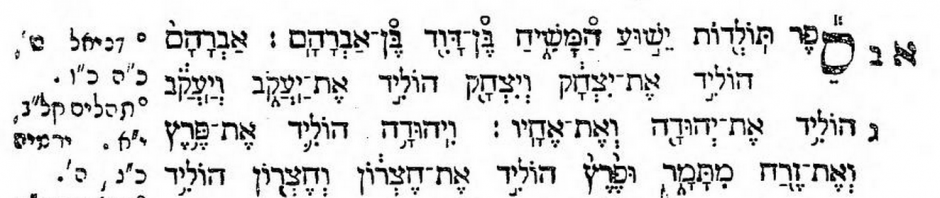
Posted in otdimjh | Tagged , , , | 1 Comment