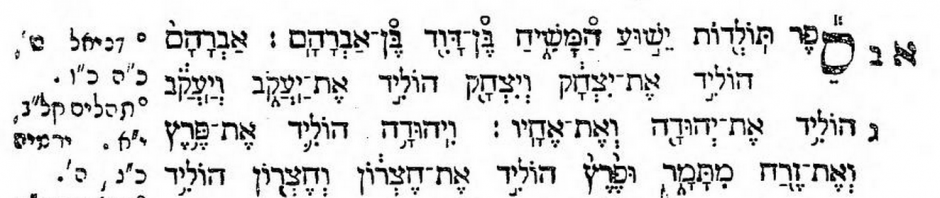

Today we commemorate the remarkable Salkinson–Ginsburg Hebrew translation of the New Testament (1885) — a work often described as the first “Messianic” translation of the New Testament into Hebrew. This translation will be highlighted in an upcoming Autumn Seminar by the Department of Linguistics and Philology at Uppsala University, exploring its origins, controversies, and continuing legacy.

Isaac Edward Salkinson
A Controversial Hebrew New Testament
Earlier Jewish renderings of the New Testament were sometimes undertaken to mock or polemicise against it. By contrast, Isaac Edward Salkinson (1820–1883) and Christian David Ginsburg (1831–1914) presented the text in an idiom worthy of the Hebrew Scriptures — elegant, reverent, and faithful. Their aim was not ridicule but revelation, making this the first truly “Messianic” Hebrew New Testament: born of devotion, not derision.


Uppsala Seminar (Autumn Semitic Seminar)
Topic: A Controversial Hebrew New Testament — The Salkinson–Ginsburg Haskalah Hebrew Translation of the New Testament (1885)
Date & Time: Tuesday, November 18, 15:15–17:00 (Stockholm time)
Location: Uppsala University, Department of Linguistics and Philology
Language: English
Zoom: Please use the contact form to receive the link or email me.
Speaker

Herti Dixon, a native of Vienna — where Salkinson laboured and frequented Haskalah literary salons — completed her Master’s thesis on the 1885 Salkinson–Ginsburg Hebrew NT at Uppsala (2023).
Learn More
For more on Salkinson’s life and translations (including Paradise Lost), see:
5 June 1883 – Death of Isaac Salkinson, Translator of the Hebrew New Testament and Milton’s Paradise Lost
Herti Dixon’s thesis – https://uu.diva-portal.org/smash/record.jsf?pid=diva2%3A1831570&dswid=5270
Prayer of Thanksgiving (Salkinson-style Hebrew)
אֱלֹהֵי יִשְׂרָאֵל, הַנּוֹתֵן דְּבָרוֹ בְּיַד נְבִיאָיו וּמְקַיֵּם אוֹתוֹ בְּיֵשׁוּעַ הַמָּשִׁיחַ,
אוֹדְךָ עַל יִצְחָק אֶדוּאַרְד סַלְקִינְסוֹן וְעַל קְרִישְׁטְיָן דָּוִד גִּינְסְבּוּרְג,
אֲשֶׁר הֵשִׁיבוּ אֶת דִּבְרֵי הַבְּשׂוֹרָה לִלְשׁוֹן הַקֹּדֶשׁ.
יְהִי פְּעֻלָּתָם לְפְרִי תּוֹרָה וֶאֱמוּנָה,
וִיבָרֵךְ כָּל הַלּוֹמְדִים וְהַמְלַמְּדִים אֶת דְּבָרְךָ בְּעִבְרִית הַיּוֹם.
וְתֵצֵא תוֹרָתְךָ מִצִּיּוֹן, וּדְבַר יְהוָה מִירוּשָׁלִַם.
בָּרוּךְ אַתָּה יְיָ, הַמְדַבֵּר בְּכָל לָשׁוֹן וּמְגַלֶּה אֶת דְּבָרוֹ בְּצִיּוֹן.
Elohei Yisra’el, hanoten devaro be-yad nevi’av u-mekayem oto be-Yeshua ha-Mashiach,
odekha al Yitzḥak Eduard Salkinson ve-‘al Krishtyan David Ginsburg,
asher heshivu et divrei ha-besorah lilshon ha-qodesh.
Yehi pe‘ulatam le-fri Torah ve-emunah,
viyivarekh kol ha-lomdim ve-ha-melamdim et devarekha be-Ivrit ha-yom.
Ve-tetze toratkha mi-Tziyon, u-devar Adonai mi-Yerushalayim.
Barukh Attah Adonai, ha-medaber be-khol lashon u-megaleh et devaro be-Tziyon.
God of Israel, who gave Your word through the prophets and fulfilled it in Messiah Yeshua,
We thank You for Isaac Salkinson and Christian David Ginsburg,
who restored the words of the New Covenant to the holy tongue of Israel.
May their labour bear fruit in renewed understanding and faith.
Bless all who study and teach Your word in Hebrew today,
and let Your Torah go forth from Zion and Your word from Jerusalem.
Blessed are You, O LORD, who speaks in every tongue and reveals His word in Zion.
https://en.wikipedia.org/wiki/Isaac_Edward_Salkinson
Test case – Romans 11:1-5
✡︎ Greek New Testament (SBL)
Ῥωμαίους 11:1–5
1 Λέγω οὖν, μὴ ἀπώσατο ὁ θεὸς τὸν λαὸν αὐτοῦ; μὴ γένοιτο· καὶ γὰρ ἐγὼ Ἰσραηλίτης εἰμι, ἐκ σπέρματος Ἀβραάμ, φυλῆς Βενιαμίν.
2 οὐκ ἀπώσατο ὁ θεὸς τὸν λαὸν αὐτοῦ ὃν προέγνω. ἢ οὐκ οἴδατε ἐν Ἡλείᾳ τί λέγει ἡ γραφή, ὡς ἐντυγχάνει τῷ θεῷ κατὰ τοῦ Ἰσραήλ;
3 Κύριε, τοὺς προφήτας σου ἀπέκτειναν, τὰ θυσιαστήριά σου κατέσκαψαν, κἀγὼ ὑπελείφθην μόνος, καὶ ζητοῦσιν τὴν ψυχήν μου.
4 ἀλλὰ τί λέγει αὐτῷ ὁ χρηματισμός; Κατέλιπον ἐμαυτῷ ἑπτακισχιλίους ἄνδρας, οἵτινες οὐκ ἔκαμψαν γόνυ τῇ Βάαλ.
5 οὕτως οὖν καὶ ἐν τῷ νῦν καιρῷ λεῖμμα κατ’ ἐκλογὴν χάριτος γέγονεν.
✡︎ Hebrew (Salkinson-Ginsburg NT, 1885)
רומים י״א : א–ה
1 אֲנִי אֹמֵר אֵפוֹא הֲיִמְאַס הָאֱלֹהִים אֶת עַמּוֹ? חָלִילָה! כִּי גַם אֲנִי יִשְׂרְאֵלִי אָנֹכִי, מִזֶּרַע אַבְרָהָם, מִמַּטֵּה בִנְיָמִין.
2 לֹא מָאַס הָאֱלֹהִים אֶת עַמּוֹ אֲשֶׁר יָדַע לְפָנִים. אוֹ הֲלֹא יְדַעְתֶּם מַה־אֹמֶר הַכָּתוּב בְּעֵלִיָּהוּ, כַּאֲשֶׁר הוּא מַשְׁטִין אֶל־הָאֱלֹהִים עַל־יִשְׂרָאֵל לֵאמֹר׃
3 אֲדֹנָי, אֶת־נְבִיאֶיךָ הָרְגוּ, וְאֶת־מִזְבְּחוֹתֶיךָ הָרָסוּ, וַאֲנִי נִשְׁאַרְתִּי לְבַדִּי, וַיְבַקְשׁוּ אֶת־נַפְשִׁי לָקַחַת.
4 וּמַה־הָשִׁיב לוֹ הַמַּאֲמָר הָאֱלֹהִי? הִשְׁאַרְתִּי לִי שִׁבְעַת אֲלָפִים אִישׁ אֲשֶׁר לֹא כָרְעוּ בִּרְכָּם לַבָּעַל.
5 וְכֵן גַּם בָּעֵת הַזֹּאת נִשְׁאָר שְׁאֵרִית כְּפִי בְחִירַת הֶחָסֶד.
✡︎ Transliteration
1 Ani omer eifo ha-yim’as ha-Elohim et ‘ammo? Chalilah! Ki gam ani Yisre’eli anokhi, mi-zera Avraham, mi-matteh Vinyamin.
2 Lo ma’as ha-Elohim et ‘ammo asher yada‘ lefaním. O halo yeda‘tem mah-omer ha-katúv b’Eliyahu, ka’asher hu mashtín el-ha-Elohim ‘al-Yisra’el lemor:
3 Adonai, et-nevi’ekha hargu, ve-et-mizb’chotekha harasu, va-ani nish’arti levadi, va-yevaksu et-nafshi lakaḥat.
4 Umah hashiv lo ha-ma’amar ha-Elohi? Hish’arti li shiv‘at alafim ish asher lo kar‘u birkhehem la-Ba‘al.
5 Ve-khen gam ba-‘et ha-zot nish’ar she’erit kefi beḥirat ha-ḥesed.
Chatgpt 5 gives a tight, verse-by-verse critique of the Salkinson-Ginsburg (S-G) renderings in Rom 11:1–5, highlighting gains, losses, and a few places to improve.
v.1
- μὴ ἀπώσατο … ; μὴ γένοιτο → “הֲיִמְאַס…? חָלִילָה!”
- Strength: “Chalilah!” is an excellent idiomatic equivalent for μὴ γένοιτο (“God forbid!”).
- Note: “יִמְאַס” (from ma’as, “reject, spurn”) fits ἀπώσατο well and resonates with Tanakh usage (e.g., 1 Sam 8:7).
- ἐκ σπέρματος… φυλῆς → “מִזֶּרַע… מִמַּטֵּה”
- Strength: Natural biblical Hebrew for σπέρμα/φυλή.
v.2
- οὐκ ἀπώσατο … ὃν προέγνω → “לֹא מָאַס… אֲשֶׁר יָדַע לְפָנִים”
- Gain: Uses covenantal verb ידע to render προέγνω, rightly evoking God’s prior covenantal knowing rather than mere foreknowledge.
- Quibble: “לְפָנִים” (“formerly”) is serviceable, but “מִקֶּדֶם” or “מֵאָז” would sound more native to biblical style and stress anteriority.
- ἢ οὐκ οἴδατε… → “אוֹ הֲלֹא יְדַעְתֶּם…”
- Strength: A good rhetorical equivalent of Paul’s formula.
- ἐν Ἡλείᾳ … ὡς ἐντυγχάνει τῷ θεῷ κατὰ τοῦ Ἰσραήλ → “…בְּעֵלִיָּהוּ… כַּאֲשֶׁר הוּא מַשְׁטִין אֶל־הָאֱלֹהִים עַל־יִשְׂרָאֵל”
- Problem: מַשְׁטִין (“accuse,” from שׂטן) tilts the sense toward prosecution. ἐντυγχάνει in Paul usually = petition/intercede/plead (positively or neutrally). Here it is “pleads to God against Israel,” but not “accuses” in a satanic sense.
- Better: “מִתְחַנֵּן/מַפְצִיר/מִתְפַּלֵּל… נֶגֶד יִשְׂרָאֵל”—keeping “against” (נֶגֶד/עַל) but avoiding the forensic/satanic overtone.
v.3 (quoting 1 Kgs 19)
- “…ἀπέκτειναν… κατέσκαψαν… ὑπελείφθην μόνος… ζητοῦσιν τὴν ψυχήν μου.”
→ “הָרְגוּ… הָרָסוּ… נִשְׁאַרְתִּי לְבַדִּי, וַיְבַקְשׁוּ אֶת־נַפְשִׁי לָקַחַת.”- Strength: Diction closely mirrors the Tanakh phrasing of 1 Kgs 19; “וַיְבַקְשׁוּ אֶת־נַפְשִׁי” is spot-on.
v.4
- ὁ χρηματισμός → “הַמַּאֲמָר הָאֱלֹהִי”
- Strength: Captures “divine oracle” nicely; χρηματισμός = a prophetic/official response.
- Κατέλιπον ἐμαυτῷ… οἵτινες οὐκ ἔκαμψαν γόνυ τῇ Βάαλ
→ “הִשְׁאַרְתִּי לִי… אֲשֶׁר לֹא כָרְעוּ בִּרְכָּם לַבָּעַל.”- Mixed: “I have left for myself” = הִשְׁאַרְתִּי לִי (good).
- “בִּרְכָּם” (their knees) pluralizes where Greek has singular γόνυ (“knee”). Tanakh idiom often uses singular (כָּרַע כָּל בֶּרֶךְ, Isa 45:23). “לֹא כָּרְעוּ בֶּרֶךְ לַבָּעַל” would be crisper Hebraically, though S-G’s plural is understandable.
v.5
- λεῖμμα κατ’ ἐκλογὴν χάριτος → “שְׁאֵרִית כְּפִי בְּחִירַת הֶחָסֶד.”
- Strength: “שְׁאֵרִית” is a superb choice for λεῖμμα (prophetic “remnant”).
- Discussion: חֶסֶד maps χάρις only partially. χάρις in Paul = unmerited grace; חֶסֶד is covenant loyalty/steadfast love. It works theologically (keeps the covenantal hue) but is not a one-to-one semantic match. Alternatives: “חֵן” (grace/favor) or compound “בְּחִירַת חֵן” to reflect Pauline nuance while retaining Hebrew feel.
- Style: “נִשְׁאָר שְׁאֵרִית” is a slight pleonasm (“remnant remained”); purely biblical Hebrew would often say simply “יֵשׁ שְׁאֵרִית” or “נִשְׁאֲרָה שְׁאֵרִית.”
Broader stylistic notes
- Register: S-G consistently aims for a biblical Hebrew register, not rabbinic/modern—an intentional strategy to “biblicize” Paul for Jewish readers. Where they drift (e.g., מַשְׁטִין), the tone becomes post-biblical and shifts the rhetoric.
- Intertextual fidelity: The Elijah quotation is handled with strong MT flavor—one of S-G’s strengths—helping readers hear Paul’s midrashic echo of 1 Kgs 19.
- Particles and flow: Additions like “לֵאמֹר” and “אוֹ הֲלֹא” are idiomatic and keep Paul’s catechetical rhythm.
- Divine names: אֱלֹהִים/אֲדֹנָי choices track biblical usage and avoid anachronistic forms; that’s good practice for liturgical/teaching contexts.
Suggested micro-revisions (keeping S-G’s spirit)
- v.2: “אֲשֶׁר יָדַע מִקֶּדֶם” (clearer anteriority).
- v.2: Replace מַשְׁטִין with מִתְפַּלֵּל/מַפְצִיר נֶגֶד (“pleads/intercedes against”) to match ἐντυγχάνει without satanic connotations.
- v.4: “אֲשֶׁר לֹא כָּרְעוּ בֶּרֶךְ לַבָּעַל.”
- v.5: “וְכֵן… נִשְׁאֲרָה שְׁאֵרִית כְּפִי בְּחִירַת חֵן.” (or keep חֶסֶד if the covenantal nuance is desired, but note the Pauline shade of χάρις).
Conclusion
Salkinson-Ginsburg’s Romans 11:1–5 is literarily elegant and intertextually sensitive, successfully “re-Hebraizing” Paul. The two most consequential choices to reconsider are (1) מַשְׁטִין for ἐντυγχάνει (over-judicial), and (2) חֶסֶד for χάρις (covenantal but not exact). Polishing those would preserve S-G’s biblical cadence while aligning even more closely with Paul’s Greek.


