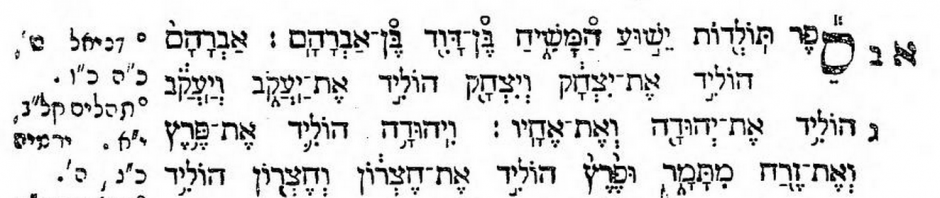

Today (3 August 2025) is Tisha B’Av, the “Black Fast” of the 9th of Av. We mourn, fast and pray on a day that commemorates a series of national catastrophes, most notably the destruction of the First Temple by the Babylonians in 586 BCE and the Second Temple by the Romans in 70 CE. Over time, it has also come to mark other tragedies associated with Jewish exile and suffering, including the crushing of the Bar Kokhba revolt (135 CE), the expulsion of Jews from Spain (1492), and the Holocaust (1941-45). Today we mourn the Israel-Gaza war and the death, destruction and grief of all in the region. Observed through fasting, lamentation, and the reading of the Book of Lamentations (Eikhah), Tisha B’Av expresses collective grief for the loss of sacred space, sovereignty, and the recurring experience of exile, serving as a profound theological and historical reflection on sin, judgment, and hope for ultimate redemption.

Destruction of the Temple of Jerusalem, by Francesco Hayez
Moses Margoliouth visited the Wailing Wall, the “Place of Wailing” in Jerusalem in May 1850 and wrote down some of the songs and poems he heard, in a letter to the Duchess of Manchester.

He set to music some of the dirges, and translated them. One in particular caught his attention.
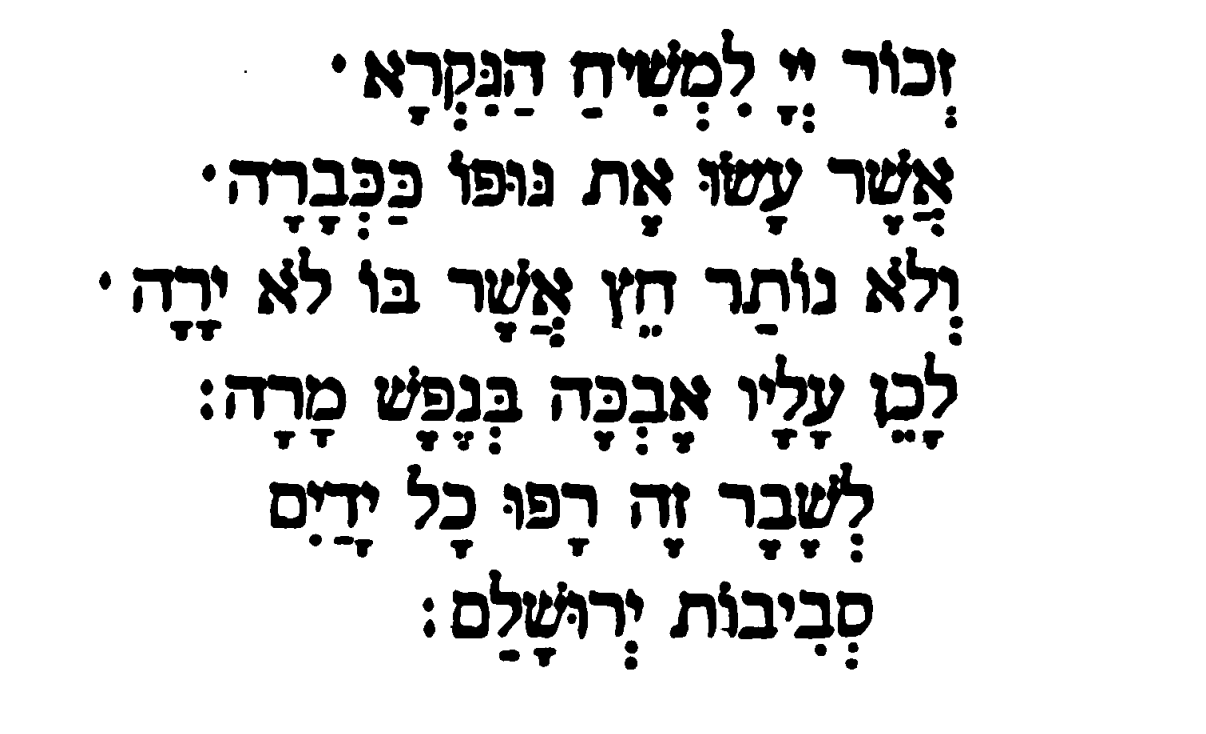

On his return to he found the prayer in the Liturgy of the Spanish Synagogue for Tisha B’Av – and recognised the Messianic allusions to Yeshua and his sufferings.

Moses Margoliouth (1818–1881) was a pioneering Jewish disciple of Yeshua in the 19th century, A scholar, traveller and translator, he met with opposition from both Jews and Christians alike. Born into an affluent Jewish family in Suwalki, Poland, his encounter with a Jewish disciple of Jesus in Liverpool resulted in his baptism in 1838 and ordination in 1844. He translated Jewish texts and commentaries for Christian readers, and contributed extensively to Hebrew Christian publications, including The Star of Jacob and The Hebrew Christian Witness and Prophetic Investigator, advocating for a distinct HC voice in theology, history and witness. Despite his achievements, Margoliouth faced professional rivalries, financial difficulties, and criticism from both Jewish and Christian communities, reflecting the distrust of Hebrew Chirstians in British society. His works, such as A Pilgrimage to the Land of My Fathers and his autobiographical novel The Curates of Rivendale demonstrated the challenge of bridging Jewish and Christian identities. Margoliouth’s defence of Paul’s Jewishness highlighted his vision of a faith that embraced Jewish heritage while affirming the Good News of Yeshua. He wrote of his own struggles for acceptance:
Alas! Little do Gentile Christians know of the bitter trials which fall to the lot of the Jewish converts. If the former knew but half, they would sympathize with the latter more sincerely, and would hesitate before they enunciate that disgusting query: “Do you think he is sincere?” Does anyone, possessing a moderate share of common sense, think that a Jew would embrace Christianity simply because he had a desire to be hated, and traduced, and maligned by the members of the Synagogue, and suspected and despised by the members of the Church?(Margoliouth 1850:333-4)
His writings reveal a complex relationship with his Jewish roots, and he maintained an appreciation for Jewish literature and intellect while critiquing contemporary Jewish practices (Ruderman 2020:110-141). His fragmented identity put him at odds with both Jewish and Christian communities as he integrated orthodox Jewish life with that of a Church of England minister.
Margoliouth’s impact as a pioneer and scholar was significant. His own struggles to integrate his dual identities were well-expressed. His attitude to Jews and Judaism was more positive than that of Frey, and his own lifestyle and family commitments were maintained.

Memorial plaque in Little Linford church, Milton Keynes

Margoliouth’s grave at Little Linford church, Milton Keynes.
:
Prayer
Avinu Malkeinu,
On this dark day of Tisha B’Av, we bring before You the brokenness of our world and the pain of our people.
We remember the ruins of Jerusalem, the exile of generations, the loss of sacred space, and the exile of hearts.
We lament the suffering of Jews and Palestinians, the destruction of homes and hopes, and the silence that so often falls instead of justice.
As Moses Margoliouth once listened to the dirges at the Wall and heard in them the echo of Messiah’s suffering, help us to discern the nearness of Yeshua even in our mourning.
Comfort Your people Israel. Restore Zion in righteousness and peace.
Teach us to wait with hope and to walk with humility.
Let the day come soon when mourning is turned to dancing, when the fast becomes a feast, and when all flesh shall see Your redemption.
Amen. Ken Yehi Ratzon.
תְּפִלָּה
אָבִינוּ מַלְכֵּנוּ,
בַּיּוֹם הָאָפֵל הַזֶּה, תִּשְׁעָה בְּאָב, אָנוּ מְבִיאִים לְפָנֶיךָ אֶת הַשֶּׁבֶר שֶׁל עוֹלָמֵנוּ וְאֶת כְּאֵב עַמֶּךָ.
אָנוּ זוֹכְרִים אֶת חֻרְבַּן יְרוּשָׁלַיִם, אֶת גָּלוּת הַדּוֹרוֹת, אֶת אֲבֵדַן הַמָּקוֹם הַקָּדוֹשׁ, וְאֶת גָּלוּת הַלְּבָבוֹת.
אָנוּ מְקֹונְנִים עַל סֵבֶל הַיְּהוּדִים וְהַפַּלַסְטִינִים, עַל חֻרְבַּן הַבָּתִּים וְהַתִּקְווֹת, וְעַל הַדְּמָמָה שֶׁלְּעִתִּים תּוֹפֶגֶת בִּמְקוֹם צֶדֶק.
כְּשֵׁם שֶׁמֹּשֶׁה מַרְגָּלִיּוֹת שָׁמַע פַּעַם אֶת הַקִּינוֹת לְיַד הַכֹּתֶל וְשָׁמַע בָּהֶן אֶת הֵד סֵבֶל הַמָּשִׁיחַ — עֲזֹר לָנוּ לְהָבִין אֶת קִרְבַת יֵשׁוּעַ אַף בְּאֵבְלֵנוּ.
נַחֵם אֶת עַמְּךָ יִשְׂרָאֵל. הָשֵׁב אֶת צִיּוֹן בְּצֶדֶק וּבְשָׁלוֹם.
לַמְּדֵנוּ לְקַוּוֹת וְלָלֶכֶת בְּעֲנָוָה.
תָּבוֹא בִּמְהֵרָה הַיּוֹם אֲשֶׁר בּוֹ הָאֵבֶל יֵהָפֵךְ לְמָחוֹל, הַצּוֹם יֵהָפֵךְ לְחָג, וְכָל בָּשָׂר יִרְאֶה אֶת יְשׁוּעָתֶךָ.
אָמֵן. כֵּן יְהִי רָצוֹן.
Avinu Malkeinu,
Bayom ha’afel hazeh, Tishah b’Av, anu mevi’im lefanekha et hashever shel olamenu ve’et ke’ev amkha.
Anu zokhrim et chorban Yerushalayim, et galut hadorot, et ovdan hamakom hakadosh, ve’et galut halevavot.
Anu mekonenim al sevel haYehudim vehaFalestinim, al chorban habatim vehatikvot, ve’al hadmamah she’la’etim tofeget bimkom tzedek.
K’shem sheMoshe Margoliouth shama pa’am et hakinot leyad hakotel veshama bahem et hedal shel sevel haMashiach, ezor lanu lehavin et kirvat Yeshua af be’evlenu.
Nacham et amkha Yisrael. Hashav et Tziyon b’tzedakah u’v’shalom.
Lamedenu lekavot velalechet b’anavah.
Tavo bimhera hayom asher bo ha’evel yeheafech lemakhol, hatzom yehafech lechag, vechol basar yir’eh et yeshuatekha.
Amen. Ken yehi ratzon.
Pilgrimage to the Land of My Fathers, vol, 2, page 355-366, esp. 363
The Scattered Nation, vol 1, 1866, p.175-178
Ruderman, David B. 2020. Missionaries, Converts, and Rabbis: The Evangelical Alexander McCaul and Jewish-Christian Debate in the Nineteenth Century. Philadelphia: University of Pennsylvania.


 On This Day In Messianic Jewish History
Richard, have missed these! thank you!Sent from my iPad
LikeLike